
As Alpharetta car accident lawyers, we know that cars and other motor vehicles have many different parts that may malfunction and cause accidents. Some defective auto parts that commonly cause accidents may include brake systems, wheels and tires, steering columns, fuel tanks, airbags, and more. Victims of accidents caused by malfunctioning vehicles can recover for their injuries and other losses by filing a product liability claim in court.
Auto Recalls
If an automotive manufacturer discovers that a car part may be defective and therefore dangerous, that company has a duty to report the defect to the proper federal agency and to issue a timely recall to repair or replace the potentially defective component. The National Highway Traffic Safety Administration (NHTSA) has a list of all recent auto recalls and defects posted on its website. If a manufacturer fails to report or recall a defective part, that company may face an investigation and serious sanctions by NHTSA.
For example, General Motors (GM) faced a $30 million fine earlier in 2014 due to a failure to report or recall vehicles for defective ignition switches. The ignition switches in certain GM models could automatically shut the engine off while driving, which also disabled power steering, airbags, and other safety features. It was discovered that certain GM officials knew of the potential defect since 2004, but failed to issue a recall for ten years. Over the course of the past decade, hundreds of people suffered injury or damages in accidents due to the defect, and approximately 75 or more people have died. GM now faces numerous lawsuits for personal injury and wrongful death arising out of their failure to recall the defective vehicles. Such a failure was negligent, and GM may have to pay out millions more to victims and their families in addition to the sanction by NHTSA.
Car manufacturers are not the only companies that may be held responsible in court, as any company that sells a product has the duty to recall for potential defects. At the law office of Spaulding Injury Law in Atlanta, we are dedicated to holding auto manufacturers and other large companies responsible for selling defective cars and other products. If you have suffered an injury due to a defective product, call (770) 744-0890 to schedule a free consultation with our car accident attorneys today.
Time Limit for a Property Damage Claim
In this video, attorney Ted Spaulding reviews the statute of limitations for a property damage claim in Georgia. He also reviews how long these cases typically take to resolve.
What is the time limit for a property damage claim? Hi, I’m Ted Spaulding. I’m an Atlanta personal injury trial lawyer and I’m the founder here at Spaulding Injury Law: Atlanta Personal Injury & Car Accident Lawyer. So in the state of Georgia, property damage claims have a four-year statute of limitation, unlike the personal injury part which is only two years. So you have a very long time to pursue your property damage claims. And remember, you may have two. I’ve got other articles and videos on this subject matter so look at those to make sure you understand the difference between the potential claims that you have underneath this overall property damage claim.
But you’ve got four years to file a lawsuit from the date of the wreck. You don’t want to wait anywhere close to that long. Normally, they get resolved within weeks, if not a month. So move it along quickly. It is pretty easy in the sense that it’s an empirical type thing, either the repairs are going to get done and paid for, or a total loss to your vehicle and what’s the value. So four years. Don’t go past it. I hope this answers your question. If you have any others or if you have a potential claim you would like to see if my firm can handle, respond in this video below. Go to our website spauldinginjurylaw.com, we have a contact form on there, or give us a phone call, at 770-744-0890 or 470-695-9950. Thank you for watching this video.
Who Pays My Medical Bills After a Personal Injury?
In this video, attorney Ted Spaulding reviews how medical bill payment works during a personal injury case. He also answers the question of who foots the bill.
Who pays my medical bills after a personal injury? Keep watching this video to learn the answer to this question.
Hi, I’m Ted Spaulding. I’m an Atlanta personal injury trial lawyer and I am the founder here at Spaulding Injury Law.
So this question is the root of a large misconception that I’m constantly having to deal with clients. It’s understandable why there’s this misconception, but it’s a really important one to understand and to get right. So the misconception is that after you’ve been injured, because of someone else’s fault, that they’re going to pay for my medical treatment as I go along. It just makes sense. It’s reinforced by insurance. Oh, you know, I was in a car wreck and, of course, their insurance will pay for my treatment. That’s not how it works, ladies and gentlemen. It is not a pay-as-you-go kind of system.
What I tell people is this is a reimbursement system. The law sets it up where the plaintiff, who has been injured, ultimately has to figure out how to pay for their medical treatment as they go along. So no, you are not going to have the at-fault party’s insurance pay for your treatment as you go along. You got to get the treatment, incur the damages, and then get reimbursed from their insurance company for those medical costs. So key to remember, because we’ve got a lot of medical providers out there that are telling folks that no, can’t take health insurance, the at-fault party’s auto insurance will pay for it. No, doesn’t work that way, folks. It just does not happen.
So be very careful. You’ve got to do it, you need to get the treatment that you need, and there’s two ways to do it, depending on what you have. Okay, the first and most important is health insurance. If you’ve got health insurance, by golly, use it. Don’t let the providers tell you you can’t use health insurance. Absolutely, you can use health insurance. If you’re in a wreck or you suffered a trip and fall, use your health insurance, and force them to bill it to your health insurance. Another area, if you’re on an auto wreck, would be if you have medical payments coverage on your auto policy. Now, it’s typically, if you’ve got it, it’s typically not a lot of money. So it won’t cover a ton but it’ll at least give you some benefit there.
And the next way, if you had no health insurance or you have health insurance and it, for some reason, won’t cover, meaning it legally won’t cover, then you need to find treatment. You either got to pay out of pocket or do what? You’ve got to be able to find providers that will treat you on a lien, which is, kind of, like a tab at a bar. They’ll do all the treatment for the months that you need to have it and they’ll keep a running invoice of it. Then you will pay them back out of a settlement or a verdict. Now, this is only your last resort option because as you can see, those bills can add up and it’s going to be more expensive than if it was health insurance paying it. But oftentimes, you have to have a lawyer attached to the case to be able to get one of these providers to treat you on a lien because they’re, kind of, sticking their neck out assuming you’re going to have a settlement or a verdict .
So that is how the system works and these are ways to get the treatment that you need to get while you’re injured and pursuing the ultimate claim against the at-fault party.
Thanks for watching this video. If you have any questions or concerns, feel free to reach out to me. There’s a couple of ways to do that. You can comment to this video below. You can go to my website, spauldinginjurylaw.com. Or you can leave me a phone call at one of two numbers: 470-695-9950 or 770-744-0780. Thanks for watching this video.
What Is My Car Accident Claim Worth
In this video, attorney Ted Spaulding details how to value a car accident claim in Georgia and the varying factors involved. He also explains how an experienced car accident lawyer can assist in your case.
What is my car accident claim worth? Keep watching this video to find out the components of the value of your car accident claim. Hi, I’m Ted Spaulding. I’m an Atlanta personal injury trial lawyer, and I’m the founder here at Spaulding Injury Law. So this is always the ultimate question, right, what is my claim potentially worth? And the short answer and the honest answer is in the beginning, during treatment and things of that nature, most people, lawyers, adjusters, yourself don’t know what the potential value is. Why? Because so much of it is geared around what are your injuries and how much treatment do you end up needing. That kind of fuels most of the value of your claim. And when you’re in the middle of it, or you’re at the very beginning, there’s potentially a long way to go to really know what your injuries are and what’s your longterm treatment is gonna look like. So that is kind of the bulk of it if you will. Let me give you a couple of other components that can help you longterm determine what the value is. So again, treatment is the biggest thing because that has to do with what your injuries are, how long you treat, therefore, what are your medical bills going to be and therefore also helps with the pain and suffering part as well. Obviously, jurors tend to think that you’ve gone through more pain, obviously, if you treat it longer than if you treat it shorter. So that is the biggest component as I mentioned earlier. What are your lost wages? Do you have future lost wages or lost earning capacity because you can’t work anymore? That’s a very big component. Some people have no lost wage claim. Others have a very large one. So that goes toward the value.
And then the kind of biggest difficult value determination factor is pain and suffering. We’re all guessing, adjusters, lawyers, everything else, what’s the pain and suffering worth. Every single case is different. You can have the same exact wreck with different injuries, that person gets better sooner or later than the next person so each case is uniquely different in this. What exactly did you go through? What exactly are your limitations, your loss of enjoyment of life? That’s a very tough thing. We’re all trying to determine what is a jury in the jurisdiction where we’re going to try this case, what would they tend to do with those sets of facts value-wise? And so we look at things like past verdicts, past cases that we’ve tried where jurors had similar information just to try to read tea leaves to say, “I think this is what a jury would probably do with this case.” Remember the only thing you have a legal right to in the state of Georgia is a trial to a jury of 6 or 12 of your peers to tell you what your case is ultimately worth.
So I hope this helps give you some more information to ultimately answer this very difficult question. If you have any more questions about this or any other topic, or if you have a potential claim you’d like to see if my firm can handle, respond to this video. Go to my website, spauldinginjurylaw.com, we have a contact form on there. Or give me a phone call. Two phone numbers for you, 770-744-0890 or 470-695-9950. Thanks for watching this video.
What is UM Insurance?
In this video, attorney Ted Spaulding defines UM insurance and how it works in the state of Georgia. He also explains why it is important to have.
What Is UM Insurance?
Hi. I’m Ted Spaulding. I’m Atlanta personal injury trial lawyer and I’m the founder here at Spaulding Injury Law.
So UM insurance is a very, very important topic when you’ve been in a wreck, whether it’s a motorcycle wreck, an automobile wreck, a tractor-trailer wreck, and a pedestrian wreck, by the way. UM insurance is very, very important and you’ve got to know what it is your lawyer has to be looking for. There could be multiple UM policies involved and therefore you really need to know what’s going on.
Well, UM insurance, UM stands for uninsured or underinsured motorist coverage. So that is when either the at-fault driver who has injured you has no insurance at all or what comes up often, they have insurance but not enough to cover the full value of your claim. So let’s say they only have minimum coverage, which, in the State of Georgia, is 25,000. They injure you, you have to go to the hospital, you have a 15-day hospital stay, you have real long-term damages, your lawyer determines, after months and months of treatment, that your case is probably worth $300 000 plus. Well, there’s only $25 000 in insurance, so what do you do? That’s why you need UM insurance. You need to know what’s out there. You need to know where to find UM coverage because it can add on top of the $25,000 that the at-fault party has to provide more compensation for that $300 000 value that your case may have. So really important insurance.
It’s your insurance. It’s on your automobile. It’s on your motorcycle. It’s on your ATV, whatever. It’s on your RV. I’ve had an RV case before. It is something you purchase. It’s a separate line item on your auto policy. You don’t have to have it in the State of Georgia, so a lot of people don’t have it. You pay a separate premium from the liability side. And again, it’s there to protect you and your family when you’re injured by someone else, because you don’t know what kind of insurance they’re gonna have. So UM insurance, very, very important.
If you don’t know if you have it and don’t know where to look to see if you do, reach out to an attorney. It’s really, really important. I hope this answers your question. Comment to this video if you have any additional questions about this topic or if you’re looking to talk to an attorney about a potential case, you want to see if our firm can handle it, comment to the video. Go to our website. We have a contact form there. That’s spauldinginjurylaw.com. Or give me a phone call, two phone numbers for you, 770-744-0890 or 470-695-9950. Thanks so much for watching this video.
Meet Attorney Theodore Spaulding
Watch this video to get to know personal injury attorney Ted Spaulding, founder of Spaulding Injury Law!
Hi, I’m Theodore Spaulding. I’m the founder and one of the trial lawyers here at Spaulding Injury Law: Atlanta Personal Injury & Car Accident Lawyer.
Let me tell you a little bit more about myself and my practice. I graduated from Georgia State Law School in 2005, having come from Athens at the University of Georgia with a dual degree. Since receiving my law degree, I started out immediately representing plaintiffs and personal injury cases of all sorts throughout the state of Georgia, and I continue to do so today, here at Spaulding Injury Law: Atlanta Personal Injury & Car Accident Lawyer. So I handle a number of different personal injury cases, the large majority of those being car wreck cases, tractor/trailer wreck cases, motorcycle wrecks, wrongful death matters, and serious injuries from premises liability incidences.
So the favorite part I have of practicing law is getting to know my clients intimately. A lot of them become fast friends. I’m with them oftentimes for years throughout their case, the highs and the lows, I’m counseling them throughout, and really getting to know them. I think that’s really important to be a real advocate for an injured party in a personal injury case here in Georgia, and it’s what I enjoy doing. It’s why I got into this practice is to get to know people and help people. I really am motivated by that, and my other motivation is great customer service. For far too long, this industry has not provided great customer service and has been a volume kind of practice for most, which has soured people to personal injury lawyers. Well, I take it upon myself to try to change that status of personal injury lawyers, that we’re out here to help the truly injured recover what Georgia Law allows them to recover. That’s my motivation. That’s my goal.
I hope you’ll continue to look at our firm for your case or claim. Thank you for coming to the website. Please reach out to us ultimately, we’d love to have an opportunity to talk to you further about your particular case or claim, answer any questions you have as part of your process in trying to hire a personal injury attorney here in Georgia. Ultimately, we have several third-party avenues that you can look into us a little bit further, Google reviews from past and current clients, various industry awards that we have received and the like. We would stress that you look at those things as well, and then reach out to us.
Again, thank you for thinking of us for your potential case or claim.
In this video, attorney Ted Spaulding reviews what general areas of damage you’re allowed to pursue in every case, along with a timeline of when those punitive damages come into play. He also explains what punitive damages are.
When can punitive damages be pursued in a personal injury case? Keep watching this video to find out. Hi, I’m Ted Spaulding. I’m an Atlanta personal injury trial lawyer, and I’m the founder here at Spaulding Injury Law. So punitive damages. To answer this question, first, we got to know what are your general areas of damage you’re allowed to pursue in every case, and then what and when those punitive damages come into play. So your typical areas to remind you are your medical bills, lost wages, if you have them, and pain and suffering. So those are your typical three areas that you will be seeking compensation for in a personal injury case. Now the question is, “Hey, do I have punitive damages that can add as a fourth layer of damages to that?” Well, it depends is the answer and, quite frankly, 90-plus percent of the time, no, you are not gonna have punitive damages that you can pursue.
So what are punitive damages? They are what’s called in Georgia Law, exemplary damages. They’re there to punish the defendant to deter them from this kind of action and others from this kind of action in the future. So it’s got to be real horrible conduct. Okay. It’s not just your ordinary negligence, it’s not your car wreck, where no one was drunk or high. It just, you know, wasn’t paying attention, that sort of thing. It’s got to be real egregious conduct, and there’s an actual statute on it that runs through those areas and, in general, what you’re looking for. They call it willful or wanton conduct. Okay. So it’s gotta be pretty high level. What are some examples? Well, obviously, what I just mentioned a minute ago, if you’re driving DUI, either alcohol, drugs, or prescription medication that you weren’t supposed to be driving on, that could rise to the level of punitive damages. That’s a pretty easy category. Others would be things like defamation cases and you injured someone, assault. So if you’re assaulted, that would be a punitive damage case. Those are your main areas. You’re looking for, in essence, a criminal statute that’s been violated. We’re not talking rules of the road violation. So not running a stop sign, running a red light, those sorts of things. It’s got to be those DUIs, the drugs, assaulting someone, those sorts of things. And then there could be multiple people involved that could have punitive damage liability. So you’re talking an employer whose employee was maybe drunk on the job, something like that.
So punitive damages, you got to think really horrible conduct before it’s even a possibility. It’s one reason why you ought to talk to a personal injury lawyer. You need to know whether you have punitive damages involved in your case. It can change the value of your case tremendously. So you need to know if that’s in play. Again, most of the time, it probably will not be, but it’s good to ask. It’s good to have someone look into it, make sure that box is checked, that you do or don’t have it. If you’ve got any questions about punitive damages, if you have a potential case you would like to talk to me about, please reach out to me. I’ll be happy to speak with you. There’s a couple of ways to do that. You can comment to this video below. You can go to my website, spauldinginjurylaw.com, we have a contact form on there, you can fill that out, and we’ll respond to you. Or you can give me a call directly. I’ve got two numbers for you, 770-744-0890 or 470-695-9950. Thanks for watching this video.
What Can Happen In A Personal Injury Case?
In this video, attorney Ted Spaulding explains he process of filing a personal injury claim in Georgia. He details how the goal is always to move the case along as quickly as possible, and what this entails.
What happens in a personal injury case? Keep watching this video to find out. Hi, I’m Ted Spaulding, an Atlanta personal injury trial lawyer, and I’m the founder here at Spaulding Injury Law. So this question assumes…it says case, so it assumes that your case has been filed in a court, meaning a complaint has been filed against the defendant or defendants, and you’re pursuing that case to trial. So what happens first is, obviously, the complaint is filed, it is served on the defendant or defendants. Once the defendant is served, they have 30 days to respond by filing an answer. Then typically what happens is the discovery period starts. That is a standard six-month period by Georgia law, but that can be extended or it can be shortened by the judge within discretion. Typically, it is extended at least once. Believe it or not, it is very difficult in this day and age to get a case completely litigated and ready for trial in six months. We try to do that as much as possible. Certainly in your standard car wreck cases where there’s not a lot of evidence that’s needed, maybe liability is not an issue, that that should only take about six months. However, it may stretch to a year or more depending on the complexity of the case. Then once discovery is over, you are looking at potential for motions to be filed mainly by the defense, summary judgment to try and get the case kicked out on technicalities, or other motions to limit either claims or evidence, those sorts of things. Then it is put on a trial calendar and you work your way up the judge’s trial calendar to get to number one, which means you’re going next to try your case. Most jurisdictions judges have a civil trial calendar week each month, some jurisdictions, it’s one week per quarter or two weeks per quarter. So depending on your jurisdiction or your cases, it could take much longer to actually get to number one to be able to try your case. It just is a complete guess when your case is filed, how many cases that judge has ready for trial ahead of you, how many get resolved right before trial. It is a complete guess as to when your case is gonna be filed.
The goal, though, is to move your case along as quickly as possible within reason. You want to have your lawyer build your evidence the best way possible to try the best case, but you don’t want that to take forever. So you want to keep pushing, you want to try to minimize the length of time it takes to get it to trial, and then the case is either going to resolve because the defense knows you’re heading to a trial and you have a good case, or the case is gonna be tried. All you have a right to in Georgia is a trial by 6 or 12 jurors to tell you what your case is worth. So that’s where you’re ultimately headed once your case is filed in a court of law here in Georgia.
If you have any questions about this topic, feel free to reach out to me, or if you have a case or claim that you would like to see if our firm can handle, several ways to do that. You can comment to the video below. You can go to our website, spauldinginjurylaw.com, we have a contact form there. Or you can give me a phone call, two phone numbers, 770-744-0890 or 470-695-9950. Thanks so much for watching this video.
What To Do After Injuries in A School Bus Accident?
When you send your child off on a school bus, you should be able to trust that they will safely arrive at their destination. At the Atlanta law office of Spaulding Injury Law, our personal injury attorneys are dedicated to helping parents recover for injuries suffered in school bus accidents, so call today at (770)744-0890 to schedule a free consultation.
Common Causes of School Bus Injuries
According to the National Highway Traffic Safety Administration (NHTSA), school buses are one of the safest modes of transportation for children to and from school. However, thousands of children still continue to suffer various types of injuries on school buses on an annual basis. There are many different ways a child can be injured while taking a school bus, including the following:
- Suffering injuries in a collision due to the negligence of the school bus driver or a driver of another vehicle. Driver negligence can include distracted driving, impaired driving, violating traffic laws, and much more.
- Suffering injuries as a pedestrian while entering or exiting the school bus. Children may be hit by the school bus itself or by another vehicle, especially if drivers do not obey the stop signs on the school bus.
- Falls or other accidents caused by sudden braking or lurching of the school bus or other erratic driving behaviors.
- Injuries suffered due to a failing seat belt or other safety device.
- Injuries caused by defective windows or doors.
- Injuries caused by assaults from other students because the bus driver was not paying adequate attention to the security of students.
- Trip and fall accidents due to worn or uneven flooring, stairs, or other failures to properly maintain the school bus.
If your child suffered injuries in any type of school bus accident, you may hold the school bus company, driver, or even the school liable for any injury-related losses. Such losses may include medical bills, physical pain and suffering, emotional trauma, loss of enjoyment of everyday life, permanent disabilities, and more. Though such financial recovery cannot help you child heal or take away their pain, it can make shouldering the cost of their physical recovery easier so you can focus on your child’s well-being.
Spaulding Injury Law
750 Hammond Dr #300
Atlanta, Georgia 30328
Phone: (770) 744-0890
Who Is Owed After Your Injury Claim Is Resolved
In this video, attorney Ted Spaulding reviews what happens after a personal injury case is resolved, including which individuals and entities are owed money.
Who do you owe after an injury case is resolved? Keep watching this video to find out the various individuals and entities that you may owe.
Hi. I’m Ted Spaulding. I’m an Atlanta personal injury trial lawyer and the founder here at Spaulding Injury Law.
So this, obviously, comes up at the end of the case, when you have a settlement or a verdict. The case is over, and now, the monies from that verdict or settlement need to be disbursed. So there’s several different entities and individuals that need to be paid out of that settlement in a typical situation. Now, again, every situation’s a little bit different.
So first you have the law firm that’s involved, right. Now, be mindful, your lawyer should be explaining to you that there’s two different categories that the law firms pay back. One are the attorney’s fees, which are a contingency fee, and the other are any expenses that were advanced by the firm to pursue your claim. So those come out of your settlement or verdict.
Then the other area, and the biggest one to try to grasp and why lawyers are so important, is health insurance providers, insurance companies, hospitals, who has medical liens or what’s called subrogation rights.
So one. If you have health insurance, your health insurer may be owed money back for benefits provided for your medical treatment out of your settlement or verdict. So, that needs to be discussed. It is a big area of law. It’s very difficult. Comes up every time in a personal injury case. But you have to know, do you owe that health insurance company back? You may not. Or you may owe ’em very little. So, very important.
Number two. Are there any hospital liens that have been filed by a emergency room hospital or any other providers? They’re are allowed to do that, by Georgia law, within 75 days of your treatment with them, if they’re not using health insurance. So that needs to be looked into, and then negotiated and paid.
And then three. Did you sign any lien agreements with anyone? Because you didn’t have health insurance, they were going to treat you on what’s called a lien. That normally involves your lawyer, so your lawyer’s gonna know that. We need to know what is charged there and then what, if anything, they’re willing to take off of that to be paid out of your settlement or verdict.
Then, that should be it, in most cases. Okay? The rest of the money is there for the plaintiff, for their pain and suffering that they’ve gone through, their lost wages, etc.
So that’s typically who is paid out of a settlement or verdict in a personal injury case.
If you have any questions about this topic, feel free to reach out to me. If you have a case that you would like to see if my firm can handle for you, feel free to reach out. You can comment to this video. You can go to our website at spauldinginjurylaw.com or give me a phone call. I have two phone numbers for you: 770-744-0780 or 470-695-9950. Thanks so much for watching this video.
Connect with us


- November 2025
- October 2025
- September 2025
- August 2025
- July 2025
- May 2025
- April 2025
- March 2025
- February 2025
- January 2025
- December 2024
- November 2024
- October 2024
- September 2024
- July 2024
- June 2024
- May 2024
- April 2024
- March 2024
- February 2024
- January 2024
- December 2023
- November 2023
- August 2023
- June 2023
- May 2023
- April 2023
- March 2023
- February 2023
- August 2022
Archives
- Alpharetta
- Atlanta
- Atlanta Legal Service
- Back Injuries
- Brain Injuries
- Car Accidents
- Construction Accident
- Covid-19
- Cumming
- Dog Bites
- FAQs
- Firm News
- Georgia
- Gwinnett County
- Interview
- Lawrenceville
- Motorcycle Accidents
- Negligent Security
- Pedestrian Accidents
- Personal Injury
- Premises Liability
- Property Damage
- Slip and Fall Accidents
- Spaulding Injury Law Service
- Swimming Pool Accidents
- Train Accidents
- Truck Accidents
- Uncategorized
- Video
- Wrongful Death
Categories
Spaulding Injury Law:
Atlanta
Personal Injury & Car Accident Lawyer
50 Hurt Plaza S.E. #1536,
Atlanta GA 30303
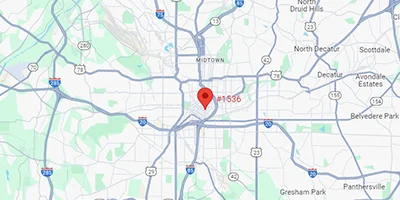 Get Directions
Spaulding Injury Law:
Alpharetta
Personal Injury & Car Accident Lawyer
44 Milton Ave #132
Alpharetta, GA 30009
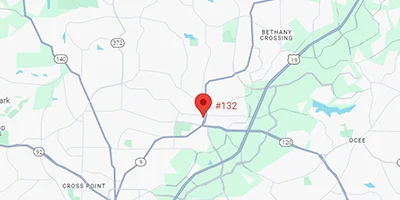 Get Directions
Spaulding Injury Law:
Cumming
Personal Injury & Car Accident Lawyer
5860 Bond St
Cumming, GA 30040
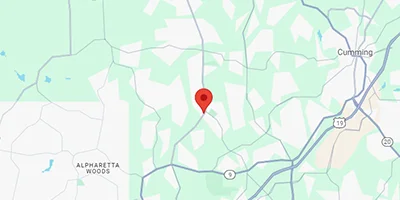 Get Directions
Spaulding Injury Law:
Lawrenceville
Personal Injury & Car Accident Lawyer
223 Scenic Hwy S #202
Lawrenceville, GA 30046
 Get Directions