
Alpharetta Personal Injury Lawyers
In this video, attorney Ted Spaulding explains what makes Spaulding Injury Law a unique place to practice personal injury trial law in Alpharetta, Georgia.
Welcome to Spaulding Injury Law’s Alpharetta, Georgia personal injury practice in our office in downtown Alpharetta off of Milton Avenue. I’m Ted Spaulding. I am the founder and lead trial attorney here at the firm. Our motto here is “Real lawyers helping real people.” Why? Because we’re real trial lawyers. We do not take a large volume of cases. You are not pushed off on a case manager and never hear from your attorney. We take a small amount of cases so we can focus each attorney on each of our clients’ cases until it is resolved. We hope you’ll learn more about our practice. Look at our Google reviews, hear what our clients in the Alpharetta area have to say about us and we hope you will reach out to us at some point and talk about your particular case or claim. Our phone number, 470-509-5772.
In this video, attorney Ted Spaulding answers whether or not a windshield is required when driving a motorcycle in Georgia.
Is it against the law to not have a windshield on your motorcycle in Georgia? Keep watching this video to find out the answer to this all-important question: to stay legal on the roads in Georgia. Hi. Ted Spaulding is the founder trial lawyer here at Spaulding Injury Law. So, the code section you want to look at is 46-315, subsection B. The answer to the question is no, but there is a significant exception to that no. If you don’t have a windshield, you must always wear eye protection. So goggles, appropriate sunglasses, got to have that at all times. You can be pulled over and ticketed if you don’t have a windshield and are not wearing eye protection. So that’s the nuance there. That was a question from my motorcycle Facebook group. Thanks for the question. So stay legal out there, guys. Windshield or eye protection, one or the other. Please follow the law.
Do you have any other questions, comments, or questions about Georgia law with motorcycles? Comment below. Let me know about windshields and eye protection if you’ve got certain circumstances. I’m curious if anyone’s been pulled over for this issue. Comment to this video, shoot me a message on Facebook. Love to hear from you. Thanks so much for watching this video.
In this video, attorney Ted Spaulding answers the question of how important it is to have a motorcycle accident attorney who also rides a bike.
Do you need a motorcycle injury attorney that also rides? Hi. I’m Ted Spaulding. I’m an Atlanta personal injury trial lawyer and I’m the founder here at Spaulding Injury Law. So this is a question I get a good bit from prospective clients who call me and it’s an interesting one, it’s really born out of in my experience marketing, right? So you get these lawyers that are sitting on a motorcycle, taking photographs for publications or their website or whatever touting that they’re also a rider, as if that gives you some sort of an advantage over the next personal injury lawyer. And quite frankly the answer is no it doesn’t. It may make you feel more comfortable as a motorcycle rider to also have a lawyer who rides and that’s perfectly fine, if that makes you feel more comfortable with that lawyer then, by all means, go with that lawyer. But you don’t need a motorcycle injury attorney who rides to get quality representation. What you need is a trial lawyer that will ultimately try your case, those are the attorneys that will get the most value for your damages. So you can have a lawyer who rides a motorcycle but is not a trial lawyer and in my experience how’s that gonna help you?
So, in my opinion, no you don’t need a motorcycle injury attorney who also rides to get quality representation, you just need to vet their experience, do they actually try cases? Are they just going to settle your case, are they a settlement mill? Those are the types of things that you need to really be asking, not whether they ride a motorcycle or not, really doesn’t matter. If they know how to try a motorcycle accident case in Georgia then that’s the type of attorney that in my opinion, you would need. So no you don’t need a motorcycle injury attorney that rides.
I hope this answers your questions. If you have any more or if you have a claim or case you would like to see if my firm can handle for you, respond to this video below or go to my website spauldinginjurylaw.com, we have a contact form there or give me a phone call. I’ve got two phone numbers for you, 770-744-0890 or 470-695-9950. Thanks so much for watching this video.
In this video, attorney Ted Spaulding explains the laws around motorcycle helmets in Georgia and how your claim could be affected.
Georgia’s Motorcycle Helmet Law and How It Affects Your Claim. Hi. I’m Ted Spaulding. I’m an Atlanta personal injury trial lawyer and I’m the founder here at Spaulding Injury Law. So this video answers the question well what is Georgia’s helmet law and how does it affect your personal injury claim? So this one is very interesting, why? Because we have laws on the books in other areas that say you can’t use this kind of evidence against a personal injury victim but yet we don’t have that coverage for motorcycle riders. What do I mean? For instance, it’s the law that you have to wear a seat belt but if you’re not wearing a seat belt and you’re injured by someone else even if wearing the seat belt could be proven to have lessened your injuries, you cannot use that as evidence in court. So it never comes to the jury’s attention that you are not wearing your seat belt, there’s a statue right on point as to this.
Bicycle riders, okay? There’s a law there that you have to wear a helmet below the age of I think 14 or 16 or something like that. But the lack of using a helmet is not something that can be used against you. So in Georgia, we have a helmet law for motorcycle riders similar to your seat belt law in the sense that it says you must wear a helmet and it says you must follow the federal regulations which is it’s got to be DOT-compliant helmet. So what if you’re not wearing a helmet at all in violation of Georgia law or you’re wearing a helmet but it’s not a DOT-compliant helmet? Well, there’s strong case law that would say that could be used against you in a situation where your injuries are related to the lack of wearing a helmet or the proper helmet.
So if you’ve got a closed-head injury, a concussion, god forbid, a much larger brain injury and you were violating Georgia law, the defense may be able to use that against you to say well you wouldn’t have been as injured and of course then you’re gonna have a jury who’s not gonna be happy to hear that you weren’t wearing a helmet when you’re riding a motorcycle and oh it’s so dangerous, all the things that we have to deal with anyway in a trial of a motorcycle case, now is amplified. So it is something that you’ve got to be careful of.
And I know a lot of riders don’t like the DOT-compliant helmets, they don’t look cool, they don’t fit well, but technology has changed a lot, there’s a lot of really cool DOT helmets that are very comfortable. Please wear a helmet and wear a DOT helmet, it protects you, it protects your legal rights, doesn’t give the other side some arguments that they can be used against you. Now of course this doesn’t come up if your injuries aren’t related to the helmet, so if you broke an arm or something like that, probably can keep that out of evidence, right? Because the lack of a helmet doesn’t have anything to do with you breaking your arm or breaking a leg or a hip or something like that, right? So it depends on the unique nature of your case but be advised you really need to follow Georgia law, got to do everything you can to protect your own interests.
So anyway that’s the answer to your question about motorcycle helmets and Georgia law and how it affects your claim. I hope this answers any of your questions. If you have further questions or you have a claim or case you would like to see if our firm can handle, comment to this video below, go to our website spauldinginjurylaw.com, we have a contact form on there you can fill out. We’ll get back to you. Or give me a phone call, I’ve got two phone numbers for you 770-744-0890 or 470-695-9950. Look forward to hearing from you. Thank you for watching this video.
In this video, attorney Ted Spaulding answers the question of if you need a police report to file a car accident claim. Watch below to learn his tips.
Can you file a claim after a car accident without a police report?
Hi, I am Ted Spaulding. I’m an Atlanta personal injury trial lawyer, and I’m the founder here at Spaulding law firm. So the answer to this question is, yes, absolutely you can. But you don’t want to do it that way. You need to call the police out to the scene so they can do a full investigation and determine who’s at fault and have a police report that shows that. That is the best evidence of fault going forward to help you with your claim.
It doesn’t mean that you’re stuck but it certainly is going to make it more difficult. You’re going to need to have witnesses. You’re going to need to get lucky and hope that the at-fault party does not lie to their insurance company and say, “Oh, no, I wasn’t at fault. The other person was.” Then you’ve got a he said, she said, and it makes it obviously much more difficult because we’re having to try to determine who’s more believable than the other, what does maybe the evidence of the crumple damage and those sorts of things say. Oftentimes there are not witnesses that stick around so that’s very difficult. So get a police report. Yes, you can file a claim, but you want to have a police report.
I hope this answers your question. If you have any further questions or if you have a claim that you would like to see if our firm can handle, feel free to reach out to me and respond to this video below. Go to my website spauldinginjurylaw.com or give me a phone call. Two phone numbers for you, 770-744-0890 or 470-695-9950.
Thank you so much for watching this video.
What Can Be Damaged in a Rear-End Collision?
Far from being mere fender benders, rear-end crashes are not only one of the most common types of accidents on our roads but also one of the most dangerous. In addition to being closely associated with serious injuries, rear-end accidents can seriously damage or total your vehicle. If another driver leaves you injured in a rear-end accident, don’t wait to reach out for the professional legal guidance of an experienced Atlanta car accident attorney.
Rear-End Accidents: The Statistics
Consider the following statistics related to rear-end accidents in the United States:
- In 2020, rear-end accidents accounted for 2,428 deaths and 6.8 percent of all fatal traffic accidents, which is second only to head-on collisions – according to the Insurance Information Institute (III).
- Overall, rear-end accidents are the most common form of car accident, and they account for 29 percent of all traffic crashes while leading to many serious injuries – according to the National Highway Traffic Safety Administration (NHTSA).
Rear-end accidents are serious accidents that can do serious damage.
Damage to Your Vehicle
If you are hit from behind, it can obviously cause serious body damage to your vehicle’s rear. The fact is, however, that the impact can also lead to frame damage, which – when severe – can damage your transmission – and which puts excess stress on your vehicle’s suspension system. All told, such damage can total even a new vehicle. In other words, the property damage to your vehicle caused by a rear-end accident can be considerable.
Your Personal Injuries
While the damage to your vehicle can be immense, it can’t compare to the physical injuries you can sustain in a rear-end accident. While you can suffer almost any kind of injury in such an accident, some are more common than others.
Whiplash
Whiplash is a soft tissue injury that is caused by the head whipping one way and then the other on the neck, and this type of movement is common to rear-end accidents. Whiplash is often an exceptionally painful injury that can also be exceptionally unpredictable. For instance, the pain can come and go, can be slow to present, and can become chronic. Because many of our bodily movements involve the head and neck, a serious whiplash injury can lead to a seriously diminished range of motion.
Broken Bones
The forward thrust of a rear-end accident can slam you forward, and the resulting impact can lead to broken bones – especially in the hand, foot, calf, or spine (in the course of bracing for impact). Broken bones tend to take a long time to heal, can lead to serious complications that include physical disability and chronic pain when they fail to heal correctly, and are exceptionally painful injuries.
Traumatic Brain Injuries
Concussions and other forms of traumatic brain injuries (TBIs) are common to rear-end accidents. As your head is thrust forward and then bounced back, your brain takes a beating, and the results are as dangerous as they are unpredictable. TBIs are often as emotionally devastating as they are physically.
Spinal Cord Injuries
The same whipping motion that can leave you with whiplash can lead to spinal cord injuries, which are closely associated with chronic pain and severe decreases in range of motion. Spinal cord injuries can occur anywhere on the spinal cord and can include injuries such as a ruptured disc or a broken, compressed, or dislocated vertebra. When the spinal cord itself is severed or seriously injured, it can lead to permanent paralysis and a lifetime of healthcare needs.
Your Losses
The covered losses – or legal damages – you suffer as a result of a negligent motorist who rear-ends your vehicle break down into three primary categories – in addition to the property damage to your car.
Medical Costs
The medical costs you face after a rear-end accident can include all the following:
- Emergency care and transportation
- Hospitalization, including care and treatment
- Medical testing, treatments, and procedures
- Care from doctors, therapists, and other medical professionals
- Rehabilitation, physical therapy, and occupational therapy
- Prescription medications
- Pain management
The injuries you sustain in a rear-end accident can lead to long-term health care needs related to ongoing concerns, secondary health issues, and health complications, and carefully assessing your medical needs in their entirety is critical to your ability to achieve your most complete recovery.
Your Lost Income
You’ve been injured by another driver’s negligence, and while you’re healing, you’re likely to experience decreased wages. If your earning potential is affected or your career is sent off course, the financial losses you suffer will be even more challenging. Because our jobs are so integral to our lives and sense of self, significant career losses can be emotional as well as financial.
Your Physical and Emotional Pain and Suffering
The physical and emotional pain and suffering you experience as a result of a rear-end collision can rival your other losses. Being injured in a violent and terrifying accident that was caused by someone else’s negligence can lead to psychological challenges, including:
- Fear of getting back behind the wheel
- Severe mood swings
- Increased anxiety and depression
- Sleep disturbances
- Difficulty concentrating
Obtaining fair compensation for your complete losses can provide you with the resources you need to regain your health and well-being.
Discuss Your Claim with an Experienced Atlanta Car Accident Attorney Today
If another driver’s negligence leaves you injured in a rear-end collision, you are facing considerable losses, and may not know where to turn for the help you need. The accomplished Atlanta car accident attorneys at Spaulding Injury Law take great pride in their proven track record of successfully guiding challenging claims like yours toward advantageous outcomes that support the best interests of our clients and allow them to achieve their fullest recoveries.
Our skilled legal team is on your side and here to help, so please don’t put off contacting us online or calling us at 770-744-0890 for more information about what we can do to help you today. We handle all types of car crash claims, including rear-end collisions.
The Right Law Firm to Get Personal Injury Maximum Compensation in Atlanta
When you need legal assistance with your vehicle collision claim, look no further than Spaulding Injury Law: Lawrenceville Personal Injury & Car Accident Lawyer. We have achieved successful results for past clients injured in car collisions, including:
- Settled a case for $$350,000. Rear-End Wreck.
- Settled a case for $50,000. Low-Impact Car Accident Case.
- Settled a case for $425,000. Motor vehicle accident, drunk driving.
Our legal team is dedicated to getting fair results for every client we represent, and we never back down from insurance companies. When you work with our firm, you can expect the highest quality of representation, personalized and effective service, and stress-free handling of your vehicle collision injury claim.
[case-result-slider id=”1″]
Our Atlanta personal injury attorneys spend a lot of our time discussing various aspects of cases in order to achieve a favorable outcome for our clients before or at trial. This focus is understandable because without it the injured will not receive a recovery at all or not what they need. In this post, I want to focus on one area of a personal injury claim that clients are almost always unaware of and lawyers usually do not focus on until after a recovery has been received.
The topic is subrogation claims against your recovery by the entity paying your medical bills during the course of your treatment. That’s right. You are not done once you receive a settlement or verdict. You may entity money out of your settlement or verdict for medical expenses paid on your behalf.
[get-in-touch-with-us id=1]
What is a Subrogation Claim in a Personal Injury Case in Atlanta?
Suppose you have a health insurance company or government program (think Medicare/Medicaid) paying your medical bills. In that case, you will be notified at some point that the company desires to claim reimbursement of the money it paid for your treatment out of your settlement or verdict in your personal injury claim or case (called a subrogation claim which arises out of the language found in the insurance policy or government program documentation).
Even if you are not put on notice of the potential claim by the entity paying your bills, you and/or your personal injury lawyer has a duty to put the entity on notice by State or Federal law. You will not be able nor should you try to avoid the subrogation issue by simply not telling anyone about your case.
An Important Note About Settling A Subrogation Claim
A note of caution at this point. Subrogation law is very tricky with numerous potential outcomes based on the specific facts of each case and the type of benefit plan at issue. The nuances of the right of subrogation cannot be covered fully in this blog post. Therefore, if you have significant medical bills and therefore a potentially large subrogation claim against you and your recovery, it is always wise to speak to a qualified personal injury lawyer in your area who can help you navigate the legalities of subrogation law and reimbursement.}
That being said, there are a few basic takeaways about subrogation claims that I have learned over the years handling catastrophic injury cases throughout Georgia. The most important takeaway is that these claims are negotiable and therefore you and your personal injury lawyer should always try to reduce the amount you owe out of your settlement or verdict for a subrogation claim.
How to Handle a Subrogation Claim in Atlanta
Why are these claims negotiable? First and foremost because the law in Georgia and the Federal law in certain subrogation claims is very plaintiff friendly. Georgia law allows for an argument against paying a subrogation claim after a car accident or other personal injury called the Made Whole Doctrine. In summary, this doctrine (if it applies in your situation—see disclaimer above about nuances) allows you and your personal injury lawyer to make the argument that your settlement or verdict was not large enough to trigger the entity’s right to reimbursement out of your settlement at all. The Made Whole Doctrine states that the plaintiff first has to be made whole for all of his or her economic and non-economic damages before the entity with the subrogation claim has a right to reimbursement.
Therefore, unless your settlement or verdict fully covers all of your medical expenses (past and future), all lost wages (past and future), any out of pocket expenses due to your injuries, and all of your pain and suffering damages, the subrogation claim does not exist under the Made Whole Doctrine and nothing is paid out of your settlement or verdict. Whether your settlement or verdict has made you whole is a determination to be ultimately made by a judge or jury.
The second reason these claims can and should be negotiated is because if you hired a lawyer to handle your claim/case Georgia and Federal law requires that the subrogation claim be reduced to cover your expenses in having to pay your Georgia lawyer for obtaining your recovery for you. This automatically reduces the full subrogation claim amount before you even make a Made Whole Doctrine argument and applies whether or not the Made Whole Doctrine is applicable in your situation or not.
The third and final reason these claims can and should be negotiated is a practical one. If you and your lawyer were to deny any payment to the subrogation entity, in order to recover, the subrogation entity would have to sue you and have a judge or jury agree that it has a right to subrogation. This is a very expensive endeavor for the company and likely will not occur if the subrogation claim is small to begin with.
Even if the claim is significant, if the Made Whole Doctrine applies, the company knows that suing you and getting a judge or jury to say you were made entirely whole through your settlement or verdict is highly unlikely. This is why subrogation claims should be negotiated for a very reasonable amount. The insurance company and/or government program does not want to spend the time and money pursuing you in court if it can be avoided. However, that is not to say lawsuits have not occurred over the subrogation issue. They have.
Seek Legal Representation For Issues Related to a Subrogation Clause
When you have received a settlement or verdict for your injury claim or case, your and your lawyer’s work is not over. Any subrogation claims need to be dealt with expeditiously by an experienced personal injury attorney. The best result, in our opinion, is to quickly deal with the subrogation after settlement for as little money as possible. Hence, you have closure of all issues involving your personal injury case.
Being involved in a car accident can be challenging enough, especially if you experience painful injuries and your vehicle is damaged beyond repair. However, what can make it even worse is learning that the other driver has no insurance in your car accident.
If you have found yourself in this very situation, you may not know what your next steps should involve. Keep reading to learn what to do in an Atlanta car accident if the other driver has no insurance.
What Georgia Law Says About Automobile Insurance?
First, a quick reminder of how Georgia auto insurance works.
The laws in Georgia are fairly straightforward. All Georgia drivers must have liability insurance to drive on public roads and highways in this state. This insurance type helps the at-fault driver pay damages owed to the person he or she hit. The minimum amount of coverage every driver in Georgia must have by law is $25,000 per person and $50,000 per incident.
Even though liability insurance is a legal requirement in Georgia, an estimated 12% of drivers do not have insurance. This can mean that if you are involved in a car accident, there is a chance that the collision will involve someone who doesn’t have any type of insurance to cover your accident-related costs.
Additionally, because Georgia only requires $25,000.00 worth of liability coverage, even if the at-fault driver has insurance, minimum coverage may not fully compensate you for your damages.
Being Involved in an Accident With an Uninsured Driver
What happens if the person at fault in an accident has no insurance? We’ll run through what options you have in this instance below.
File a Claim With the Driver
Georgia is not a no-fault state, which means that if you are involved in a car accident, you can sue the driver responsible for it regardless of whether or not he or she has auto insurance available to cover your claim. In saying that, suing an uninsured driver may not be worth your time and effort.
Even if you win your case, they are unlikely to have the assets to pay the judgment, which means you are likely to still be out of pocket. As a result, this is never your best option but one you must know you have the legal right to pursue if the next option is ultimately unavailable.
File An Uninsured Motorist (UM) Coverage Claim
In Georgia, UM insurance is not compulsory, which means you do not have to purchase it to be legal on the road at the time of signing up for auto insurance. This type of insurance is in addition to your standard auto insurance policy. It provides a layer of protection if the at-fault party does not have insurance to cover your damages and would be on your auto insurance not the at-fault party’s.
If you have UM insurance coverage, you can receive a payout for any damages and injuries caused by an uninsured driver. It also means you receive payment to cover your costs against hit-and-run drivers. Like with liability insurance limits in Georgia, the minimum amount of UM coverage you can purchase is $25,000.00.
If you are unsure whether or not you purchased UM coverage, file a UM claim with your insurance company immediately after the wreck, regardless. In the worst case, your insurance company gets back to you to tell you you officially have no UM coverage. In the best case, you learn you did purchase UM coverage and at what level and will have some available insurance to pay you for your damages caused by the uninsured driver.
Talk to a Lawyer
A car accident can be one of the most stressful experiences of your life, particularly if you’re not sure what your rights are and what you should do to manage the entire situation. It is always wise to speak to an auto accident attorney early after an injury accident because figuring out whether or not there is insurance coverage and how much can be complicated. They can look at your insurance types and form some options for you based on what these are.
What About Underinsured Coverage?
There is another scenario you need to be mindful of beyond when an uninsured driver hits you. Sometimes, the at-fault party in a collision does have insurance; they just don’t have enough to cover your accident-related costs. To avoid being out of pocket, UM coverage can still come into play to protect you from not being fully compensated for your losses.
In this scenario, UM stands for Underinsured Motorist. This insurance bridges the gap between what your accident losses are and what the at-fault driver can pay through their insurance coverage.
For example, if your accident-related costs came to $150,000, and the other driver only had insurance for $50,000, you may find yourself with a $100,000 shortfall. Having underinsured coverage can ensure you’re not financially disadvantaged by your accident.
Underinsured motorist coverage situations are even more complicated to figure out than your uninsured motorist coverage scenario. Suppose you are faced with an underinsured motorist coverage situation. In that case, it is absolutely essential you speak to a car accident lawyer who can help you figure out how the difference insurance policies work together to provide at total amount of available coverage.
What a Lawyer Can Do to Help?
Being involved in a collision will likely be one of the most stressful and overwhelming experiences of your life. It may be made even more so if you don’t know what steps to take next. Contacting a personal injury lawyer in Atlanta, GA, is likely your best bet to ensure you are not missing available insurance coverage that could help provide you with full compensation for your damages.
An experienced accident lawyer in Georgia can review accident reports to determine fault, interview eyewitnesses, communicate with the at-fault insurance company and your insurance company on your behalf, and gather evidence to strengthen your case.
An accident attorney can then review all available insurance policies to determine coverage levels for your accident, calculate your accident-related costs, and explain everything in great detail to put your mind at ease. Essentially, your lawyer can ensure that every rock is looked under for available insurance coverages and determine how those policies potentially combine to provide you with the maximum insurance coverage for your damages possible. You can, therefore, have peace of mind that nothing has been missed.
Even though auto insurance is a legal requirement in Georgia, that doesn’t mean any collision you are involved in will be with a driver who can afford to pay your accident-related costs. To avoid being out of pocket for an accident that wasn’t your fault, consider looking at your insurance policies and contact us at Spaulding Injury Law: Atlanta personal injury & Car Accident Lawyer for advice.

Our Lawrenceville motorcycle accident law firm knows that accidents involving any type of motor vehicle have the potential to cause severe injuries. However, some forms of transportation are riskier than others. People who ride motorcycles are often at a high risk of suffering particularly serious injuries in the event of a collision. This is because a motorcyclist does not have the large metal shell of a vehicle around him to protect him from other cars or objects with which he may collide. Additionally, because there are not safety restraints, motorcyclists are often thrown from their bikes. Hitting the road or even skidding across the road can not only cause injuries at the points of impact, but also place them in danger of being hit by oncoming traffic or other motor vehicles. As you can imagine, motorcyclists often sustain serious injuries in accidents and 4,957 motorcyclists died1 from their injuries in 2012 alone. If you have been injured in a motorcycle crash, contact a motorcycle accident lawyer right away.
According to the top motorcycle accident attorneys, some of the most common injuries suffered by motorcycle accident victims include the following:
- Traumatic brain injury
- Brain bleeding
- Trauma to the head or skull
- Spinal cord injury
- Broken back
- Internal bleeding
- Internal organ damage
- Broken or shattered bones
- Facial fractures
- Crushed limbs that may lead to amputation
- Road rash or other burns
- Lacerations
- Severe bruising
These severe injuries often require extensive medical treatment including trauma care, surgery, hospitalization, rehabilitative therapy, specialist consultations, home health care, special equipment, and much more. Furthermore, many motorcycle accident victims are unable to work while recover, if they are ever able to work again. This can lead to a substantial amount of lost income and benefits. In addition to financial losses, victims often suffer significant physical pain and suffering as well as emotional issues related to their injuries.If a motorcycle accident is caused by the negligence of another party, the injured motorcyclist has the legal right to recover damages2 for both their financial and intangible losses with the help of a motorcycle accident attorney. Negligent parties may include other drivers, manufacturers, or government entities. An experienced Atlanta motorcycle accident lawyer at the office of Spaulding Injury Law can help determine your legal rights to recovery and pursue a legal claim. Call our office today at (770) 744-0890 for a free consultation to discuss your case with our motorcycle accident lawyers.
In this video, attorney Ted Spaulding reviews the impact that social media posting on sites like Facebook can have on your personal injury case resolution.
How can social media affect your personal injury case? Watch this video to find out.
Hi, I’m Ted Spaulding. I’m an Atlanta personal injury trial lawyer and founder here at Spaulding Injury Law.
So this is a hot topic in the personal industry. It’s one that comes up often now. We get it all the time in discovery, asking for our clients’ social media handles, asking for access to social media. If it has been made private, why? Well, they’re looking for any sort of information that they can, in my opinion, twist and use to say, “You’re not as injured as you say you are.”
So obviously the real big problems would be if you are exaggerating your injuries, right? That’s not what the system’s supposed to be about. So if you are testifying that you are so injured, you can’t do things like mow the lawn or go on family vacations or walk without pain, but then, on social media, here’s pictures of you skiing with your family in Colorado, here’s pictures of you doing some sort of project around the house or comments about working out or things like that that are inconsistent with what you are talking about with regard to your injuries and how it affects you and the limitations that you’re having. So those are the things that they’re looking for, again, to perpetuate that notion ultimately to a jury that, “Hey, this is one of those plaintiffs that we hear about in the media that is faking injuries and things of that nature, because look at all these social media posts that are inconsistent with what he or she is telling the doctors, is telling you are her injuries and limitations.” So that’s what they’re looking for.
What I tell folks is to be very careful with social media once you have a personal injury. You don’t want to talk about the incident on social media. Things can be twisted that you say. You don’t want to talk about your condition because if you’re having a good day and you truly are injured but you post something about, “Hey, feeling great today,” that sort of thing, that’s going to be twisted by a defense lawyer. And again, understandably so, to a certain extent because they’re going to say, “Wait a minute, this says you’re feeling better.” Well, it may have been that day but now, you got to explain that away. So just don’t do it. I tell folks, unless it is your livelihood, stay off of social media after a personal injury incident until your case is resolved. You don’t want to give them anything that you’ve got to explain away, even if it is benign.
So that’s how social media can affect your personal injury case. Be careful. If you have any questions or concerns, please feel free to reach out to me. If you have a potential claim that you would like to discuss with me, I’d be happy to talk to you. You can comment to this video below. You can go to our website, spauldinginjurylaw.com. We have a contact form there. Or you can give me a phone call, two phone numbers for you: 770-744-0 or 470-695-9950. Thanks so much for watching this video.
Connect with us


- November 2025
- October 2025
- September 2025
- August 2025
- July 2025
- May 2025
- April 2025
- March 2025
- February 2025
- January 2025
- December 2024
- November 2024
- October 2024
- September 2024
- July 2024
- June 2024
- May 2024
- April 2024
- March 2024
- February 2024
- January 2024
- December 2023
- November 2023
- August 2023
- June 2023
- May 2023
- April 2023
- March 2023
- February 2023
- August 2022
Archives
- Alpharetta
- Atlanta
- Atlanta Legal Service
- Back Injuries
- Brain Injuries
- Car Accidents
- Construction Accident
- Covid-19
- Cumming
- Dog Bites
- FAQs
- Firm News
- Georgia
- Gwinnett County
- Interview
- Lawrenceville
- Motorcycle Accidents
- Negligent Security
- Pedestrian Accidents
- Personal Injury
- Premises Liability
- Property Damage
- Slip and Fall Accidents
- Spaulding Injury Law Service
- Swimming Pool Accidents
- Train Accidents
- Truck Accidents
- Uncategorized
- Video
- Wrongful Death
Categories
Spaulding Injury Law:
Atlanta
Personal Injury & Car Accident Lawyer
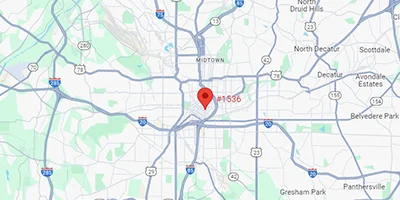
50 Hurt Plaza S.E. #1536,
Atlanta GA 30303
 Get Directions
Spaulding Injury Law:
Alpharetta
Personal Injury & Car Accident Lawyer
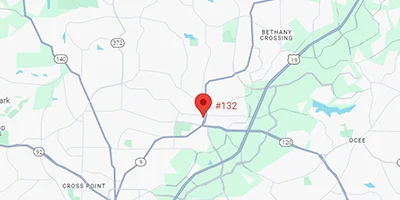
44 Milton Ave #132
Alpharetta, GA 30009
 Get Directions
Spaulding Injury Law:
Cumming
Personal Injury & Car Accident Lawyer
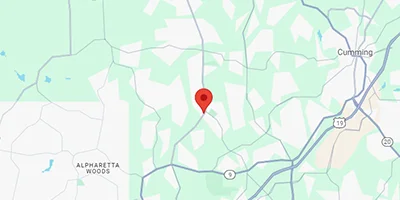
5860 Bond St
Cumming, GA 30040
 Get Directions
Spaulding Injury Law:
Lawrenceville
Personal Injury & Car Accident Lawyer
223 Scenic Hwy S #202
Lawrenceville, GA 30046
 Get Directions