
Legal Insights: How Uber & Lyft Accident Claims Work
FREE Injury Consultation
Submit your details or call 470-380-0144
Once your information is submitted, a team member will be in touch within 1-2 Hours

















Rideshare Accident Claims: Insights from an Atlanta Personal Injury Attorney
If you're involved in a car accident with an Uber or Lyft driver, you might assume the claims process is straightforward, just like any other car wreck. That assumption could be a costly mistake.
Rideshare accident claims are a unique and complex area of personal injury law. The insurance landscape is layered, the available evidence is different, and the strategies required to secure fair compensation are far more nuanced than in a typical collision. As an Atlanta personal injury trial attorney with nearly two decades of experience, I’ve navigated these complexities for countless clients. The key to a successful outcome isn't just knowing the law; it's understanding how rideshare companies and their insurers operate.
This article will break down the two most critical aspects of an Uber or Lyft accident claim: insurance coverage and evidence. Understanding these factors is essential, whether you're considering handling the claim yourself or hiring an attorney.
The Most Important Factor: Unpacking the Layers of Insurance
In any personal injury case, the amount of available insurance coverage sets the boundaries for your potential compensation. With Uber and Lyft, this isn't as simple as just dealing with one policy. There are multiple potential layers of coverage, and which one applies depends entirely on the driver's status at the exact moment of the crash.
Layer 1: The Rideshare Company’s Commercial Policy
The good news for victims hit by an at-fault Uber or Lyft driver is that these companies are required to carry substantial commercial liability insurance. Traditionally, this includes a $1 million liability policy. However, access to this full amount is not guaranteed. It depends on what the driver was doing:
- Actively Engaged (Picking Up or Transporting a Passenger): If the driver was en route to pick up a passenger or already had a passenger in the vehicle, the $1 million policy is typically in effect.
- App On, Waiting for a Ride Request: A lower tier of coverage may apply, such as $50,000 per person/$100,000 per accident for bodily injury, plus property damage coverage.
- App Off (Personal Use): Uber or Lyft's insurance provides no coverage. You must pursue the driver’s personal insurance.
Determining the driver's status is the first and most critical step. This is where many claims become contentious, as insurance companies may dispute whether the driver was "on the clock."
Layer 2: The Driver’s Personal Auto Insurance
Next, we look at the driver’s individual car insurance policy. A major complication arises here: 99% of standard personal auto policies exclude coverage for commercial activities like ridesharing.
Most drivers do not notify their insurer they are driving for Uber or Lyft to avoid premium increases. Without a specific rideshare endorsement, their personal policy will likely deny your claim. An experienced attorney can investigate this and determine if the policy can still be accessed.
Layer 3: Your Own Uninsured/Underinsured Motorist (UM/UIM) Coverage
Your own UM/UIM coverage can provide an additional layer of protection. If the combined coverage from Uber/Lyft and the at-fault driver isn’t enough, you can turn to your own policy. Catastrophic injuries can lead to claims that exceed $1 million, so robust UM coverage is essential.
| Layer 1: The Rideshare Company’s Commercial Policy | |
|---|---|
| Driver Status | Coverage Provided (Rideshare Company) |
| Actively Engaged | Typically, $1 Million Liability Policy is in effect. (Driver en route to pick up or transporting a passenger.) |
| App On, Waiting for a Ride Request | A lower tier of coverage: e.g., $50,000 per person/$100,000 per accident for bodily injury, plus property damage coverage. |
| App Off (Personal Use) | No Coverage provided by Uber or Lyft. Must pursue the driver’s personal insurance. |
| Critical Note: Determining the driver's status is the first step and is often disputed by insurance companies. | |
| Layer 2: The Driver’s Personal Auto Insurance | |
| Coverage Source | Likelihood of Coverage |
| Driver's Personal Policy | High Probability of Exclusion/Denial. Most standard personal policies exclude coverage for commercial activities (ridesharing). Few drivers have a specific rideshare endorsement. |
| Complication: Most drivers don't notify their insurer to avoid premium increases. An experienced attorney may be needed to investigate policy access. | |
| Layer 3: Your Own UM/UIM Coverage | |
| Coverage Type | Purpose/Benefit |
| Your Uninsured/Underinsured Motorist (UM/UIM) Coverage | Provides an Additional Layer of Protection if combined coverage from Layers 1 and 2 is insufficient. Essential for catastrophic injuries that exceed $1 million. |
| Recommendation: Robust UM/UIM coverage is essential for protection against large claims. | |
Unique Evidence in Rideshare Accident Cases
Beyond insurance, Uber and Lyft cases offer unique opportunities for gathering evidence that standard car accident cases don’t. This evidence can be pivotal in proving fault and determining which insurance policy applies.
Digital and Electronic Data
- The App Itself: The rideshare app records driver status, routes, speed, braking, and more. This data must be formally requested and preserved quickly.
- Dash Cams: Many rideshare drivers install dash cams. These recordings can provide indisputable evidence of how the accident occurred.
- Proof of Driver Status: Your legal team must secure digital confirmation of the driver’s app status at the time of impact. This determines which insurance policy applies.
Traditional Evidence
- Police Report: A police report provides documentation of the scene, identifies witnesses, and may include a preliminary fault determination.
- Witness Statements: The passenger in the Uber or Lyft is a crucial witness. Their testimony about the driver's behavior can significantly impact your claim.
You Deserve an Expert on Your Side
Navigating a claim against a massive corporation like Uber or Lyft and their team of experienced insurance adjusters is not a fair fight. They understand the complexities of their policies and will use every ambiguity to minimize payouts.
The good news is that these cases often involve substantial insurance coverage. Accessing that coverage requires deep knowledge of the layered insurance structure and a proactive strategy to gather the right evidence. You need a legal team that understands these tactics and is ready to take the case to trial if necessary.
If you have been injured in an accident involving an Uber or Lyft driver, don't leave your recovery to chance. Arm yourself with knowledge and get an experienced legal advocate on your side.
Have you been in a rideshare accident in Atlanta? Contact me today for a free, no-obligation case evaluation. At Spaulding Injury Law We have the experience and resources to fight for the justice and compensation you deserve.
Article by Ted Spaulding
Spaulding Injury Law:
Atlanta
Personal Injury & Car Accident Lawyer
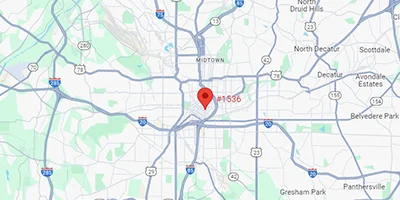
50 Hurt Plaza S.E. #1536,
Atlanta GA 30303
 Get Directions
Spaulding Injury Law:
Alpharetta
Personal Injury & Car Accident Lawyer
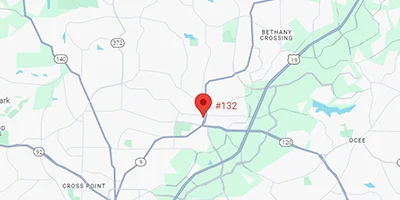
44 Milton Ave #132
Alpharetta, GA 30009
 Get Directions
Spaulding Injury Law:
Cumming
Personal Injury & Car Accident Lawyer
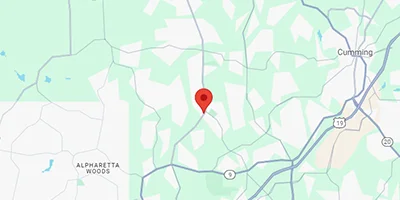
5860 Bond St
Cumming, GA 30040
 Get Directions
Spaulding Injury Law:
Lawrenceville
Personal Injury & Car Accident Lawyer
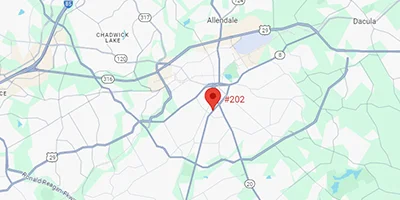
223 Scenic Hwy S #202
Lawrenceville, GA 30046
 Get Directions