
2 Ways To Obtain Inexpensive Motorcycle UM Insurance
As an Alpharetta motorcycle accident lawyer, I’m going to give you two tricks on how to add UM coverage to protect you in case you’re in a motorcycle collision.
As you know, I’m a huge proponent of my clients having as much UM coverage as you can afford. It’s there to protect you and your family if you’re injured.
So, how do you get UM coverage when, as we know, motorcycle coverage can be very expensive? There are two tricks to get it, and it’s based off of the fact that a lot of people don’t understand that UM coverage protects you when you’re in multiple different vehicles, regardless of whether that coverage is attached to just one vehicle.
For instance, if you have an everyday vehicle, truck, or car that you take to and from work, basically, a vehicle that you use other than your motorcycle, that UM coverage on that vehicle will cover you if you’re in a collision on your motorcycle and vice versa.
What Are The Tricks For Getting Inexpensive UM Coverage In Atlanta?
The first trick is to look at your policies on your everyday vehicles and increase the UM coverage through there. It will be cheaper than increasing your UM coverage on your motorcycle.
The second way is if you’ve got an umbrella policy already, which is attached to your homeowner’s coverage, you can add the product umbrella UM. This is very cheap to do, and normally umbrellas are at least $500,000, sometimes a million dollars.
This is a way that you can get a million dollars of UM coverage that will cover you no matter what vehicle you’re in, including your motorcycle.
My advice is that you’ve got to get as much coverage as possible. We’ve already had two accidents here in the past, both where the motorcycle driver was not at fault, both of them life-lighted. They’re doing okay, but they’re in bad shape physically.
Please look at your policies, talk with your insurance agent and get those UM coverages increased as much as you can possibly afford to protect you and your family.
If you have any questions or concerns about this topic or any others, feel free to shoot me an email, I’d be happy to discuss any of your questions or concerns.
As Georgia injury and wrongful death attorneys, we occasionally see other attorneys marketing themselves as motorcycle injury attorneys in Cumming who also ride motorcycles. You may have seen them too.
A picture of the lawyer in a suit sitting on his or her beautiful motorcycle with the caption reading “Injured While Riding? Hire an Injury Attorney Who Rides!”
There is an implication that if a motorcycle rider is injured or killed in a wreck, having an attorney who rides motorcycles handle the case somehow provides them an advantage over having an attorney who doesn’t ride. We disagree.
It is a clever marketing tool to try to target an audience with whom you have something in common as an attorney, but it is just that – a marketing tool.
What you or your loved one needs if you are injured in a motorcycle wreck is an injury attorney who knows Georgia law, will work hard to learn all of the facts of your case and any peculiar legal nuances that may apply. And most importantly knows how to try a motorcycle case to a jury.

There are differences between injury or death cases involving motorcycles, tractor trailers, and regular passenger vehicles. But an experienced and hard-working attorney who knows those differences can handle any of those cases.
You don’t have to have driven a tractor trailer to know how to handle trucking cases, and you don’t have to have ridden a motorcycle to know how to handle a motorcycle case.
Can Advertising Affect How You Perceive A Motorcycle Attorney?
There are plenty of attorneys who try to develop a specialty in particular types of accident cases such as motorcycle cases for various reasons.
One, it can be a good business model to narrowly tailor your practice; two, the chosen specialty likely closely aligns with the attorney’s interests; and, three, it’s great for marketing if you can stand out as the go-to attorney for a specific type of case.
But in our opinion, there is no actual advantage to you, the injured party, solely because your attorney also rides motorcycles.
To be clear, there is absolutely nothing wrong with attorneys who market themselves as injury attorneys who ride motorcycles.
If the attorney is otherwise qualified and it makes you as a client more comfortable that you have riding motorcycles in common with your attorney compared to others you have interviewed then that is a perfectly legitimate reason to hire that attorney.
Our point is simply that experience riding motorcycles has little to no bearing on an attorney’s ability to successfully handle a motorcycle accident injury or death case.
Just like you do not need an attorney who has slipped and fallen to handle a slip-and-fall case or an attorney who has been arrested and prosecuted to handle a criminal case, you do not need an attorney who rides motorcycles to handle a motorcycle accident or death case.
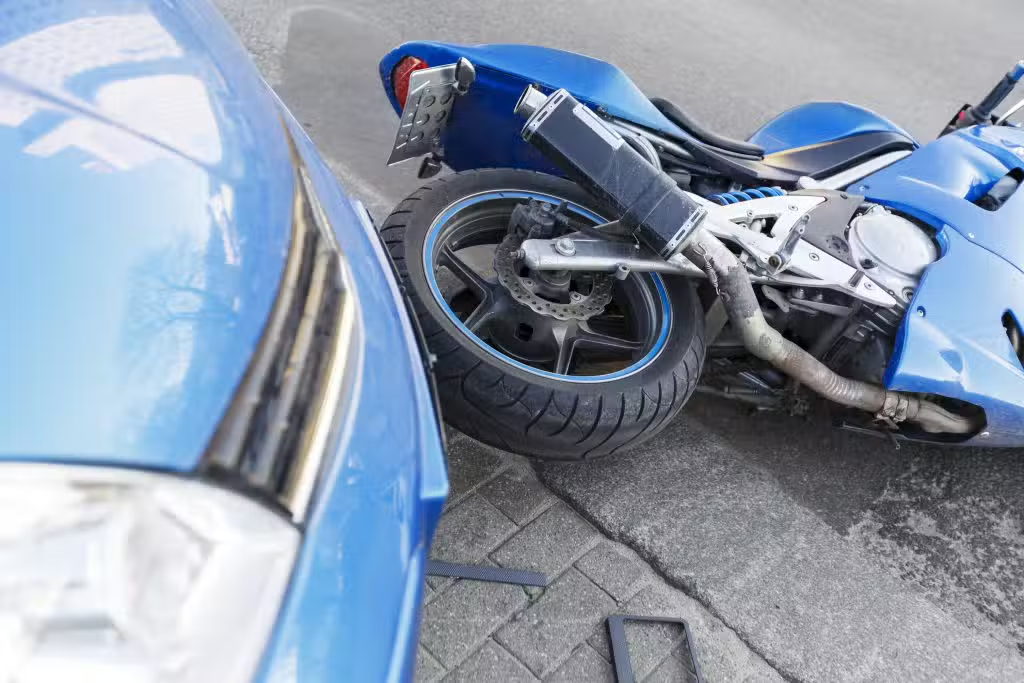
BOTTOM LINE: What IS important is to hire a lawyer that knows how to try a motorcycle injury or death case to a jury.
Hire A Motorcycle Attorney With The Experience Necessary To Win Your Case
If you or a loved one is injured in a motorcycle wreck, the type of experience that is most valuable in handling your case as successfully as possible is not riding experience but Georgia injury litigation experience including experience handling motorcycle cases.
Odds are the insurance company representative who will be evaluating your case and deciding who they believe is at fault and how much your injuries are worth in a settlement will probably not have motorcycle riding experience either.
In that event, they will not be impressed at all by whether your attorney rides motorcycles or not.
What they will be impressed by is whether your attorney knows how to gather all of the relevant facts of your case, knows how to identify all of the available insurance coverage that may apply to your claim, knows how to gather all of the related medical treatment records and bills and present them in an organized fashion with a full understanding of the injuries caused by the wreck, knows how to properly value a Georgia motorcycle injury claim based on all of the facts and circumstances of your case, and knows when to take a case to trial when a fair settlement is not being offered.

The nuance that makes Georgia motorcycle injury claims different from regular passenger vehicle claims is subtle but important, and it should be known by a good, experienced injury and wrongful death attorney whether they ride or not.
For the most part, the same Georgia rules of the road apply to motorcycles that apply to every other vehicle. And for the most part, the same rules of civil liability apply to motorcycle accidents that apply to every other vehicle accident.
An attorney’s knowledge of the nuance that applies to motorcycles both under Georgia law and in practice is gained primarily from experience working on motorcycle injury and death claims on behalf of clients in need and not from personal experience riding motorcycles.
Our firm has learned a lot about the nuances of riding motorcycles through the years from clients we have helped through very difficult motorcycle injury and wrongful death cases. It is difficult for me to imagine how that experience could have been replaced by simply knowing how to ride a motorcycle.
I analogize having an injury attorney who rides motorcycles to having a heart surgeon who has had open heart surgery.
While it might make you feel slightly better than your surgeon can empathize with what you are about to go through in the operating room, you would never let that empathy trump your insistence that your surgeon first and foremost be highly qualified to perform heart surgery based on years of education and experience performing successful heart surgeries.
Your surgeon does not need to have had the surgery performed on them to know how to perform them successfully. For an experienced injury and wrongful death attorney, the same is true.
They do not have an advantage in vehicle cases because they drive a car, and they would not have any real advantage in a motorcycle case because they ride.

So what is the takeaway from all of this? If you or a loved one are injured or killed in a motorcycle accident, your first priority in finding a Georgia injury attorney should be to find an experienced injury and wrongful death attorney.
Interview several to find the best fit for you and your case, and do not let a marketing tool steer you to someone who is not otherwise qualified to help you through such an important time in your life.
An Overview Of Wrongful Death Lawsuits In Georgia

When a drunk driver takes the wheel, a landlord fails to keep a property maintained, or a doctor fails to diagnose a disease, wrongful death can happen. How is “wrongful” death defined?
In Georgia, if you die accidentally because someone was negligent, will your family have legal options? Will they be entitled to compensation? Keep reading, and you’ll learn what everyone needs to know, in these dangerous times, about wrongful death and the law in Georgia and how a wrongful death attorney in Atlanta can help.
What is a Wrongful Death Lawsuit in Atlanta?
When another person’s negligent action – or negligent lack of action – causes an accidental death, even though there was no intention or premeditation to kill, the fatality may be deemed a “wrongful” death.
When someone’s negligence leads to someone else’s death, a wrongful death lawsuit may be pursued, usually by the immediate relatives of the deceased person, against the person or persons whose negligence caused the death.
A wrongful death lawsuit is a civil lawsuit that seeks monetary compensation. A civil case is an entirely different type of procedure from a criminal prosecution.
Criminal prosecutions may lead to criminal convictions and penalties such as fines and incarceration.
However, monetary damages can only be acquired by surviving family members through a civil wrongful death lawsuit.
How Does a Wrongful Death Suit Help Grieving Families?
A family that prevails with a wrongful death lawsuit can obtain compensation for a decedent’s lost wages and more. The average wrongful death settlement varies depending on a number of factors, so it is important to speak to an attorney to find out how much your case is worth.
If you lose a parent, child, or spouse accidentally in the state of Georgia, as difficult as it may at a time of grief, you must seek the advice of an experienced Atlanta wrongful death attorney who can explain your family’s legal rights and options.

Who Can Recover Wrongful Death Compensation in Georgia?
Each state has wrongful death laws which spell out who can file a wrongful death suit, what damages are available, and a statute of limitations restricting the amount of time a decedent’s survivors have to take legal action.
Georgia law specifies precise rules for determining who is entitled to file a wrongful death claim.
Nevertheless, according to the Atlanta law firm of Spaulding Injury Law, trying to file a wrongful death claim in Georgia can be “quite complicated and confusing.”
In Georgia, if the decedent was married at the time of the death, the spouse alone has the exclusive right to take legal action and recover wrongful death damages.
If there is no spouse, the right to sue for wrongful death passes to the decedent’s children. If there is no spouse or children, the right to sue passes to the living parents of the deceased.
If there is no living parent, children, or spouse, only then does the right to sue pass to the administrator of the decedent’s estate.
How Are “Negligence” and “Wrongful Death” Legally Defined?
One of the main wrongful death elements is negligence. The law in Georgia defines a “wrongful death” as a death caused by the “negligent, reckless, intentional, or criminal” actions of another person or an “entity” like a business.
Generally in civil law, “negligence” is defined as the failure to act with reasonable care when there is a duty to do so, and that failure then results in someone else’s personal injury or wrongful death.

If the decedent in a wrongful death and his or her spouse were parents, the surviving spouse must also represent the children in the wrongful death action.
However, Georgia law specifies that a spouse may not receive less than a third of the total damages in a wrongful death award – it doesn’t matter how many children have to split the remaining two-thirds.
Georgia law has established two kinds of wrongful death claims. A claim that is strictly aimed at compensating the financial losses related to the deceased person’s death may be brought by or on behalf of the deceased person’s estate.
The estate may obtain damages for medical costs arising from the deceased person’s fatal injury or illness, funeral and burial expenses, and the pain and suffering of the deceased person prior to death.
How Much Can You Sue for in Wrongful Death Cases in Atlanta?
The second type of wrongful death claim – filed by or on behalf of the family members – goes beyond the decedent’s personal damages and accounts for the losses to the family members including the “intangible value” of the decedent’s life.
Surviving family members may potentially be compensated for:
- lost income and lost benefits, including the decedent’s projected earnings
- loss of consortium, companionship, and other intangible benefits provided to loved ones
How long do a decedent’s survivors or an estate administrator have to file a wrongful death lawsuit in Georgia?
The statute of limitations for wrongful death cases in this state, in most circumstances, is two years. However, in some narrowly limited situations, that two-year “clock” may be “tolled” or paused.

For instance, if a criminal prosecution is being conducted regarding events related to the wrongful death – a DUI prosecution of the negligent driver, for example – the statutory “clock” on the civil wrongful death case is suspended until the criminal case concludes, at which time the clock begins to “run” again.
Additionally, in Georgia, the statute of limitations in wrongful death cases may be “tolled” or paused for as long as five years if the decedent’s estate has not been probated.
That means, in rare cases, some wrongful death claims may be filed seven years from the date of the death. If you lose a loved one in a wrongful death in Georgia, don’t wait two years – or seven – and then scramble to file a wrongful death lawsuit at the last minute.
When Should You File a Wrongful Death Claim in Georgia?
Instead – and again, this may be difficult immediately after losing a loved one – you should put your wrongful death case as quickly as possible in the hands of a skilled Atlanta wrongful death lawyer.
Heartache and sorrow can be overwhelming after the unexpected loss of someone you love, and no sum of cash can ease that pain, but the future of your family after a loved one’s wrongful death is a genuine and necessary consideration.
In the 21st century, dangers can lurk almost anywhere. A trip to the convenience store, a simple surgical procedure, even dinner at a restaurant could lead to a deadly vehicle crash, an incident of fatal medical malpractice, or a food poisoning fatality.
In such cases, wrongful death settlements and verdicts can provide for families that would otherwise suffer financial hardship and help the family members to move ahead positively and constructively with their lives.

Contact Our Wrongful Death Law Firm in Atlanta at Once
In the state of Georgia, if you lose someone you love because someone else was negligent, you must think of your family and the future.
It may be painful to deal with the emotional and legal issues at the same time, but it’s imperative to let a skilled Atlanta wrongful death attorney help your family, protect your rights, and advocate on your behalf after a loved one’s wrongful death. Our attorneys work on a contingency fee basis, so there’s no need to worry about paying upfront lawyer fees for your wrongful death case.
No rider ever plans to be in a motorcycle accident, but part of being a good rider means being prepared for the unexpected. This mantra not only helps you avoid accidents.
It is also critical to make sure you are able to recover full compensation from an insurance company if you are ever injured in a motorcycle accident caused by another driver in the state of Georgia.
Things can seemingly happen very fast after a motorcycle crash and our Alpharetta motorcycle accident law firm knows this very well.
You have to figure out how badly you are injured, how to pay for your medical treatment, how to repair or replace your motorcycle, how to obtain transportation until your motorcycle is repaired or replaced, how to handle time away from work and so many other things that hit you unexpectedly following any motorcycle crashes.
It can be a very stressful and chaotic time. Insurance companies know this, and they can and often will use that stress and chaos to take advantage of you if you are not prepared to deal with them.
You won’t even realize you are being taken advantage of at the time because the insurance company will make it seem as if they are on your side and are doing you a favor to help you out with your insurance claim by doing things like offering you a fast settlement upfront at a time that they know your out-of-pocket expenses may be mounting and cash flow may be tight.
Be prepared, and do not fall for the insurance company’s tried-and-true tricks to take advantage of you following a motorcycle accident.
Here are five things you need to know to protect yourself if you are ever injured in a motorcycle accident:
1. Do Not Provide a Recorded Statement to the Insurance Company
This is one of the insurance company’s oldest tricks and one they will use on almost every motorcycle insurance claim they receive. The insurance claims representative will usually tell you he or she needs to get a recorded statement from you to begin processing your claim.
While the insurance company will usually ask you for permission to begin recording you (because it is illegal in some states to record someone without their permission), they will not tell you that you have absolutely no obligation to provide the recorded statement.

They are trained to make it sound as if you have no alternative but to provide the recorded statement or else they cannot begin processing your injury claim or sometimes even your property damage claim.
In fact, we have had clients tell us that insurance representatives have outright lied to them and told them they cannot and will not process their claim unless they provide the recorded statement. That is simply not the law in Georgia.
The insurance company has a duty to investigate any claim made against any insurance policy they have issued to determine if the claim is covered by the policy or not if the person(s) they insure is at fault, and, if so, to determine the amount of compensation that should be paid to cover the damage caused by the person(s) they insure.
They have a duty to complete this investigation within a reasonable time whether you provide them with a recorded statement or not.
The only reason they want a recorded statement at the very beginning of their investigation is to get you on tape saying something about the accident or about your injuries that they can use against you later.
You see, what the insurance companies know is that injury claims can take months if not years to be settled if the injured person is willing to fight for full compensation for their injuries. Over that time, memories can fade and new facts can come to light.
Most often, those new facts come from your doctors as they learn new information about the scope of your injuries and the treatment that will be required to heal them.
Insurance companies want to have you on tape a day or two after your accident describing the scope and severity of your injuries and pain so that if you or your doctors ever try to say that your injuries are more extensive or more serious than you first described on tape they can try to argue that those injuries were not caused by the accident because you made no mention of them on your recorded statement.
It is common for a person injured in any type of accident to not notice or appreciate the full extent of their injuries immediately after the accident.
Sometimes you “hurt all over” and cannot pinpoint your worst injury, and sometimes an injury may not become painful right away or the pain may be masked by other more severe pain.
But when an insurance company asks you to describe your injuries on a recorded statement, it is solely for the purpose of trying to use anything you say (or don’t say) against you if your injuries later turn out to be anything other than what you first described.
Do not unknowingly provide them with this potential evidence to use against you.
2. Put All Insurance Companies Including Your Own on Notice of the Motorcycle Accident.
Few people know that failing to promptly notify an insurance company of a claim can prevent you from being able to pursue the claim.
One of the first things you should do after an accident is to notify all insurance companies that may have insurance policies that could cover the accident that the accident has occurred, that you have been injured, and your motorcycle has been damaged, and that you may need to pursue a claim against their insurance policy as a result.
This particularly applies to your own insurance company. Many people do not contact their own insurance company after motorcycle wrecks because they fear it will cause their rates to increase even though the accident was not their fault. That is almost always a mistake.
First, unless you have recently been involved in multiple other accidents, it is extremely rare that any accident that is not your fault will have any effect on your insurance rates.
Second, it is almost impossible to know right after a motorcycle crash how much insurance compensation will be required to cover the full extent of your injury claim and whether the at-fault driver has enough insurance coverage to pay your full claim.
In Georgia, your own auto insurance policy may provide you additional coverage if the at-fault driver’s insurance policy is not big enough to pay the full legal value of your injury claim. This additional coverage benefit typically starts at $25,000 and may go up exponentially from there depending on how much under-insured motorist coverage you pay for.
However, if you do not notify your own insurance company about the motorcycle crash soon after the accident occurs, you could be in violation of one of the terms of your insurance policy that requires you to promptly report any accidents which may be covered by the policy.
That violation could then provide your insurance company a legal excuse to refuse to pay you the coverage benefits that you pay for every month.
Even though you may not ultimately need to use your own insurance coverage, they still have the same legal duty as the at-fault driver’s insurance company to investigate your accident claim to see if they are required by your policy to cover it.
Notifying them right away puts them on a level playing field with every other insurance company involved in your claim and enables them to investigate the claim while all of the evidence is fresh.
That is why they require you to notify them of the accident promptly and why the law allows them to refuse to cover your claim if you wait too long after the accident to tell them about it.
3. Follow Your Doctor’s Advice.
As we mentioned above discussing recorded statements, your doctor’s diagnosis, opinions, and treatment recommendations regarding your accident-related injuries may change over time as he or she learns more information about your injuries. It is very important to the success of your injury claim that you follow all of your doctor’s treatment advice.
Insurance companies are naturally skeptical of any injury you claim to have received in a motorcycle accident, particularly internal injuries to your neck and back which are not as obvious as cuts or broken bones.
If you tell your doctor you are injured and your doctor prescribes treatment for that injury, which you then do not follow, it suggests to an insurance company and to a jury that you must not have been as injured as you claimed.
Both insurance companies and juries assume that people who are really injured will follow their doctor’s orders to try to get better.
Even though you may be busy or have other good reasons why you are not able to follow your doctor’s advice, your failure to follow your doctor’s advice will be used against you to argue that you were somehow exaggerating your injuries and your pain and suffering.

If your doctor prescribes you treatment that you do not agree with, you should immediately schedule an appointment for a second opinion.
If that doctor agrees with the first doctor, then you should immediately begin the treatment or be prepared for your failure to do so to be used against you to reduce the value of your claim.
If your doctor prescribes a treatment you cannot afford, you should notify your doctor of this immediately so it will be noted in your medical records and ask if an alternative treatment option that you can afford is available.
You should also immediately consult an injury attorney because they often can refer you to treatment providers who will agree to provide treatment now and wait to be paid until you receive your insurance check after your case settles.
4. Don’t Settle Too Early.
As we mentioned previously, one of the insurance company’s tactics to take advantage of you is to offer you a settlement very early on after you first file your insurance claim.
They know it may be tempting for you to accept a quick settlement when you have just incurred a number of unexpected out-of-pocket expenses and do not want to have an insurance claim hanging over your head for many months.
As tempting as it may seem, do not fall for this tactic and settle your case too early.
The value of your injury claim is determined by the severity of your injuries, the total cost of your medical treatment (without factoring in any health insurance benefits you may receive), any lost wages or other expenses you incurred because of the accident, and the pain, suffering, and inconvenience you experienced as a result of the accident. Together, these are referred to in the legal world as your “damages.”

It usually takes time to learn the full extent of your damages, and if you settle too early, you very likely will not be receiving full and fair compensation for all of the damages caused by the accident.
Most importantly, if you settle too early, you risk letting the insurance company off the hook before you even know the full extent of your injuries.
Sometimes, motorcycle injuries caused by an accident may not be painful right away and may not be noticed for several weeks or even several months.
Once you settle your insurance claim, there is no way to go back and re-open it later to get additional money if you realize you are more injured than you first thought.
That is why insurance companies love to reach quick settlements for relatively low amounts so that they do not risk having to pay you a lot more money later once you learn the full extent of your damages.
That is why injury attorneys always caution injured clients not to settle too early before you know the full extent of your injuries and damages and can properly assess the full value of your injury claim.
5. Talk to an Atlanta Motorcycle Accident Lawyer Even if You Do Not Hire One Yet.
While following these first four tips will make you far more prepared to handle a motorcycle injury claim successfully than someone who doesn’t, nothing will increase your odds of success like consulting with an experienced motorcycle injury attorney who handles these claims on a regular basis.
Every injury claim is unique, and it is impossible to fully equip motorcycle riders in an article like this with everything you will need to know to successfully battle an insurance company.
The way to obtain the best results for your motorcycle injury claim is still to talk to an Atlanta motorcycle accident attorney as soon as possible after the accident.
Even if you are not sure if you want to or need to ultimately hire a motorcycle attorney to handle your claim, you should still contact an attorney to discuss your claim before you have any contact with the insurance company. Most injury attorneys offer free initial consultations.
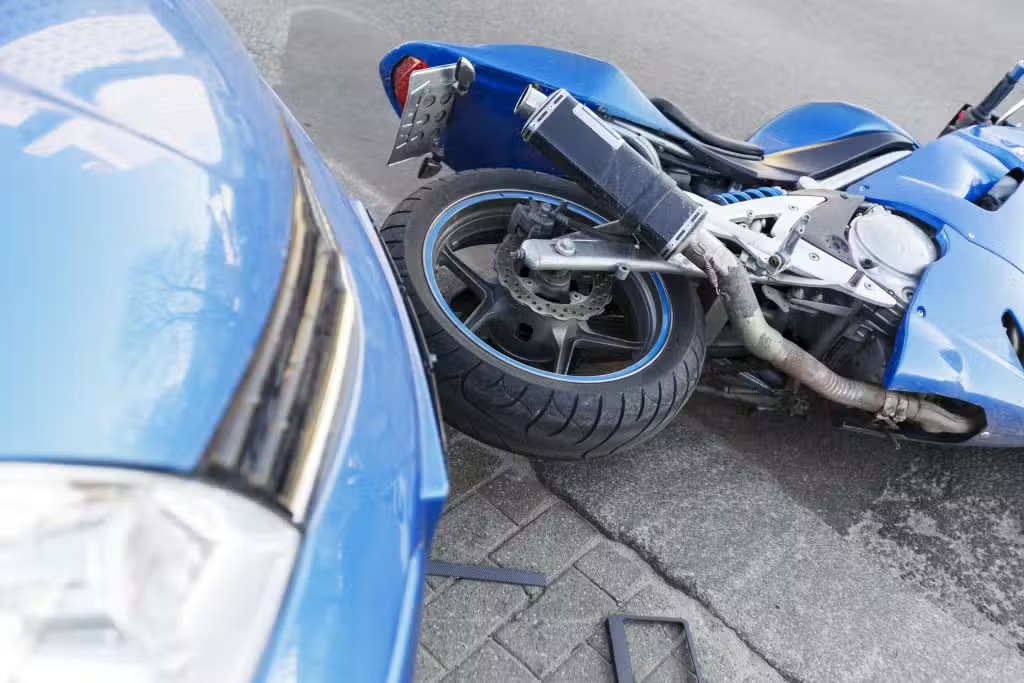
You can use that consultation to obtain valuable advice specific to your situation from an experienced attorney and to learn whether your claim is one of the many motorcycle injury claims where the only way you are going to obtain full and fair compensation from the insurance company is to have an experienced attorney on your side fighting for you.
A good injury attorney in Georgia will not pressure you to sign up right away if you are not ready or if your case is minor enough that there is a chance the value the attorney can add to your case may not justify the fee they would ultimately take from your settlement.
If it costs you nothing to at least inquire about your case in a free consultation, there is absolutely nothing to lose by giving it a try and potentially much to lose by not doing so.
In Georgia, the law requires everyone who owns and operates a motor vehicle to have at least a minimum amount of liability insurance coverage.
As a Lawrenceville car accident attorney, I can tell you that this liability insurance coverage is required so that in the event you cause an accident which damages another person’s vehicle or property or injures the occupants of another vehicle you have insurance money available to pay toward property damage, medical bills, and other damages (expenses) you caused.
Because the law only requires a minimum amount of liability insurance coverage for motor vehicles (currently just $25,000), unfortunately, often times the minimum insurance coverage amounts will not be sufficient to pay for all of an injured person’s damages including their medical bills, lost wages, and pain and suffering.
Nevertheless, the insurance company for the driver who caused the accident cannot be required to pay more than the amount of coverage their insured driver paid them to provide in their insurance policy.
So, what can you do if you are injured in a car accident and the other driver has no insurance?
What is Uninsured Motorist Coverage?
This is where UM insurance comes into play. UM insurance stands first and foremost for Uninsured Motorist.
A person who illegally drives a vehicle without any liability insurance coverage in place to pay for any damage they cause while driving is an uninsured motorist.
A person who has at least the minimum amount of legally required insurance but whose insurance policy is not big enough to pay for all of your actual damages including your medical bills, lost wages, and pain and suffering is an underinsured motorist.
Do Most Lawrenceville Drivers Have Uninsured Motorist Insurance?
Georgia law requires all insurers to include at least a minimum amount of UM coverage in every auto insurance policy they issue in this state unless the customer declines UM coverage in writing.
So, unless you specifically told your car insurance company in writing that you do not want UM coverage, you will have at least a minimum amount of UM coverage as part of your overall auto insurance policy.
You also must elect in writing if you want your UM coverage to be only the minimum amount required instead of an amount equal to the amount of liability coverage you pay for under your policy.
So, for example, unless you elect otherwise in writing when you purchase or renew your insurance policy, if you are insured for damages you cause in an accident up to $100,000 then you would also have $100,000 in UM coverage.
How UM Coverage Works After a Car Accident in Lawrenceville, GA
UM coverage is designed to provide you, as a person injured in an accident caused by another driver, with an additional source of funds to cover your damages if the driver who caused the accident does not have insurance or does not have enough insurance.
Thus, in our example above, the other driver had no insurance so you would then have to file a claim with your own UM insurance company to try to recover for your medical bills, lost wages plus an additional amount to compensate you for your pain and suffering.
Because the other driver had no insurance, your only resource to obtain insurance coverage for your damages would be to file a claim with your own UM insurance company. Thankful you have $100,000.00 in coverage to compensate you for your damages.
Notify Your Auto Insurance Company if You’ve Been Hit by an Uninsured Driver
Despite the fact that UM coverage is provided as part of your own car insurance policy that you pay for, your car insurance company will not automatically pay you the available UM benefits you request when you file a claim.
There are several hoops that must be jumped through before you will be in a position to receive any available UM benefits.
The first and most important step is that you MUST notify your UM insurance company of the accident as soon as possible after it happens. In fact, most car insurance policies require the insured person to notify the insurance company in writing of the facts and details of the accident as soon as possible or within a set period of days.
Georgia law affords your UM insurance company the right to investigate the accident themselves to determine who was at fault and what the extent of the damages were.
That is why your UM insurer in your policy requires you to notify them of the accident right away so that they can have the opportunity to investigate from the beginning while the accident is still fresh and the evidence is likely all still available.
Because the law views the insurance policy you have with your insurance company as a contract, if you fail to properly notify your UM insurance company of the fact you were in an accident (in writing if that is what the policy requires), even if the accident was clearly not your fault, your UM insurance company can (and will) argue that you breached your insurance contract by failing to provide them timely notice of the accident.
If the court agrees that you breached your insurance contract, then it will excuse your UM insurance company from having any legal duty to pay you any UM benefits under your policy.
How Can a Lawrenceville Personal Injury Attorney Help After a Car Accident With an Uninsured Driver?
When filing a UM claim, you must keep in mind that your own insurance company will handle the claim just like the at-fault driver’s insurance company. Just because it is your insurance company does not mean it has your best interest at heart. Its goal is to minimize what it has to compensate you for your injuries.
If your UM insurance company believes that you were at least partially at fault in the accident or does not believe you were as injured as you claim you were, they may refuse to pay you the full amount you demand for your medical bills, lost wages, and pain and suffering.
Sometimes, both parties are not able to reach an uninsured motorist claim settlement. If they refuse to pay you the reasonable amount you believe you are legally entitled to from your available UM benefits, then your only recourse is to file a lawsuit.
Suing an Uninsured Driver for Damages After a Car Accident
However, here is the catch when having to sue your own insurance company. In Georgia, that lawsuit cannot be filed directly against the insurance company. You must sue the at-fault driver even though he or she does not have insurance.
Suing an underinsured motorist is not easy. Ironically, your UM insurance company has the right under Georgia law to defend the at-fault driver in the lawsuit because they will be responsible for paying any judgment you win against that driver up to the limits of your UM insurance policy.
Thus, why we caution you not to be lulled into thinking that because you are being compensated by your own insurance company, you will be treated better. The insurance company will still fight your claim just as if it was the at-fault driver’s insurance company.
This article provides a basic overview of UM insurance in the context of an at-fault driver who has no insurance at all. However, it really only scratches the surface of all the nuances of liability insurance and UM coverage issues in Georgia.
Because there are so many hoops to go through and so many things to know, it is always a good idea any time you are injured in an accident to consult with an experienced personal injury attorney right away even if the attorney does not take your case.
Experienced personal injury attorneys know how insurance companies operate and can help you navigate the system without the stress and pitfalls of trying to negotiate with the insurance company yourself.

What happens if someone gets in an accident while driving your car?
Who is liable in a car accident: the owner or the driver?
How will the insurance company handle your damage claim?
And what if you are injured by the negligent driver of a vehicle who is not the vehicle’s owner?
Can an Atlanta car accident attorney help?
There’s a lot to consider, but keep reading, and you’ll learn the answers every driver in Georgia needs to know.
The Importance of Understanding Your Auto Insurance Policy
In the state of Georgia, if anyone other than you drives your personal vehicle, make certain that you thoroughly understand the terms and conditions of your automobile insurance policy.
Policies differ, so if you loan your vehicle, you need to know how your auto insurance works if another driver crashes your car.
Although policies differ in the details, most automobile insurance policies cover any licensed driver who is living in your household, unless a driver is specifically excluded from coverage by the policy.
In fact, some auto insurance policies require all of the drivers in a household to be specifically included in the coverage.
What is “Permissive Use” and How Does It Affect a Car Accident Claim?
If you have family members or friends who occasionally borrow and drive your vehicle, you probably do not have to worry about their auto insurance coverage, provided that they are licensed drivers.
Most automobile insurance policies provide coverage for what is called the “permissive use” of the vehicle with the owner’s consent.
The basic principle to remember is that when you loan your vehicle, you are also loaning your vehicle’s insurance.

And even if you loan your vehicle to someone who holds another auto insurance policy, when that person drives your vehicle, your own policy provides the primary coverage, and that driver’s policy will (in most cases) provide secondary or excess coverage.
Most automobile insurance policies cover particular vehicles, so a policy “follows” the vehicle rather than the driver.
What Happens When You Let Someone Else Drive Your Car and He or She Crashes It?
Let’s say that you loan your vehicle to your next-door neighbor, Pat, to buy groceries, because Pat’s own car is in the shop.
Pat crashes your car into another vehicle in the parking lot of the supermarket, so the primary coverage that will pay for the other driver’s damages is your own auto liability coverage.
You’ll have to file the claim with your auto insurance company and pay the deductible.
You’ll also probably have to deal with a subsequent rate increase.
If the other driver’s damages surpass your own policy’s limits, and Pat has his or her own has separate coverage, in most cases, at that point, Pat’s coverage will kick in.
On the other hand, if the collision was not Pat’s fault but the other driver’s, your claim would be paid by the other driver’s coverage – provided that driver is not uninsured or underinsured – and your own automobile insurance would not be affected.
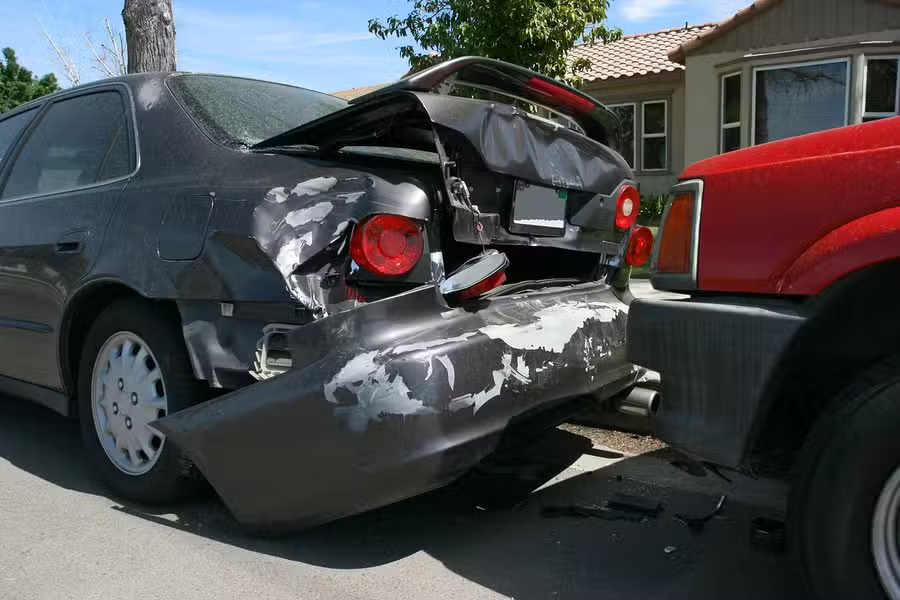
In any event, if you did not give permission to someone outside of your household to use your vehicle, but that person takes the vehicle anyway and causes a collision, you should not be held liable for damages.
Is It Possible to Prove That You Did or Didn’t Loan Your Vehicle?
However, unless you can prove that your vehicle was taken without your consent, if the person who took it causes an accident, you may be held liable for damages anyway.
Especially if a friend or neighbor has borrowed your vehicle in the past, it can be almost impossible to prove that you did not give permission in a subsequent instance.
You can also be sued and held liable if you loan your car to an unlicensed driver or to an impaired or intoxicated driver who causes an accident.
Of course, if your vehicle is stolen and the thief crashes into someone, you will not be liable for the other driver’s damages, and your damages will be paid for by your own policy.
As stated previously, if you loan your vehicle to anyone for any reason, it’s imperative to understand your auto insurance policy’s provisions, terms, and conditions.
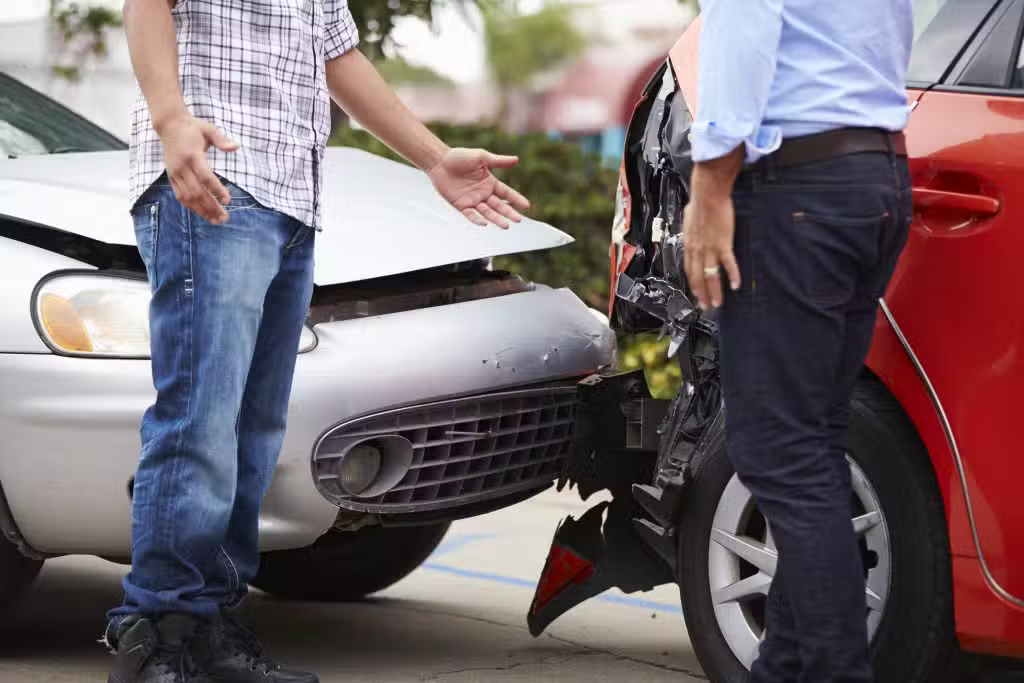
Your policy will tell you who can drive your vehicle, who can’t, and what happens if you loan your car to someone who gets involved in an accident.
What to Do After a Car Accident in Atlanta
What if you are the person who’s injured by a negligent motorist driving a vehicle that he or she does not own?
If you are injured in a collision by any negligent driver in the state of Georgia, it’s imperative – as soon as possible after you’ve obtained medical treatment – to discuss your legal rights and options with an experienced Atlanta personal injury attorney.
When you are injured by another person’s negligence in this state, the law is on your side, and you’re entitled to full compensation for your medical expenses, lost wages, pain, and personal suffering arising from the accident and injury.
Especially when a negligent driver was driving a vehicle that he or she did not own, a personal injury case can get legally complicated fast, and you’ll need an injury lawyer’s guidance and advice.
How Can an Atlanta Personal Injury Attorney Help After a Car Accident?
Don’t try to negotiate an injury claim by yourself.
Negotiating on your own with an insurance company might be fine if you sustain only vehicle damage, but if you’ve been injured, your health and your future are too important to risk.
If you’re injured by a negligent motorist who does not own the vehicle that he or she was driving, a skilled Atlanta personal injury attorney can determine who is liable for your injury and negotiate a claim on your behalf.
For example, employers may be held liable for negligence, including negligent driving, when an employee is negligent while performing job-related duties.
In most cases, if an employee who is “on the clock” collides with another vehicle while operating an employer-owned vehicle, the employer can be held accountable for the accident and injuries.
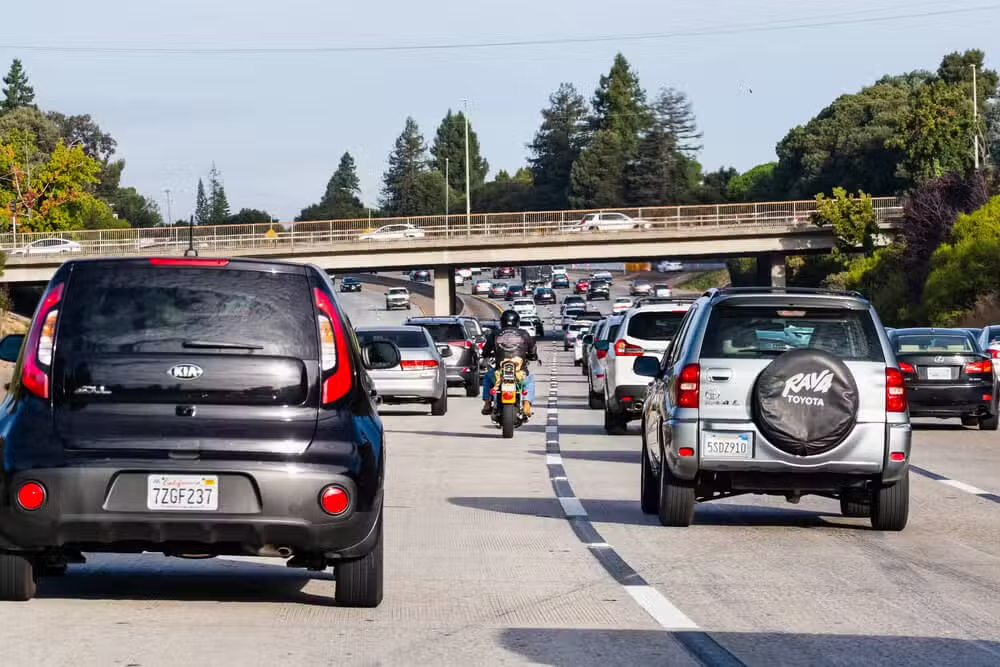
Whether you are a parent, an employer, or just a friend or neighbor, don’t loan your vehicle to a driver who falls into one of the following categories.
Under the legal doctrine called “negligent entrustment,” the owner of a vehicle may be held accountable for injuries and related damages caused by these kinds of drivers:
- underage, inexperienced, and unlicensed drivers
- drivers under the influence of alcohol or drugs
- anyone who is injured, ill, or taking medication for an injury or illness
- any driver who is known to the vehicle’s owner as an irresponsible or reckless driver
If you’ve been injured by a negligent driver in Georgia, you are entitled to both compensation and justice.
A qualified Atlanta personal injury attorney can provide sound legal advice, aggressive representation, protect your rights, and bring your personal injury case to its best possible resolution.
The American Humane Society reports that more than four million people in the U.S. become dog bite victims every year. Over 800,000 of those victims visit U.S. emergency rooms each year.
Many dog bites cause severe damage, and a few are even fatal. Could you be at risk? What about your child? When a dog bites someone, what should happen next? Can an Atlanta animal bites lawyer help?
Children are the victims of about half of all dog bites. The elderly are also dog bite victims in disproportionate numbers.
Thirty-four people died in the U.S. in 2015 as the result of dog bites. Biting dogs can cause serious nerve and muscle damage, disfigurement, scarring, and enduring psychological pain and harm.

How can you protect yourself and your child from biting dogs? Which dogs are the most dangerous? And precisely what legal recourse do dog bite victims have in the state of Georgia?
Keep reading – those questions and more are about to be answered. First, an explanation of how the law and the courts in Georgia handle dog bite cases.
How Are Dog Bites Handled Legally in Georgia?
Some states impose what the law calls “strict liability” on dog owners. In those states, owners are “strictly” liable for injuries that their dogs cause, whether or not the owners are aware of the dog’s aggressive nature.
However, strict liability for dog owners is not the law in Georgia.
To be awarded damages in Georgia, a dog bite victim must prove that:
- The dog was vicious or dangerous, and
- The owner knew or should have known that the dog was vicious or dangerous
The dog’s aggressive nature and the owner’s awareness of that nature are separate issues in a dog bite case, and a plaintiff must prove both for his or her lawsuit to prevail.
Proving a dog owner’s knowledge can sometimes be difficult, so any dog bite victim in Georgia will need to be represented by an experienced Atlanta dog bite attorney.
What’s the Legal Definition of a “Dangerous” Dog in Georgia?
Georgia’s Dangerous Dog Control Law defines a dangerous dog as any dog that, according to reliable records, has inflicted a serious, unprovoked injury on a human person after March 31, 1989, or any dog that bites, attacks, or endangers persons without provocation after the dog has been classified as a dangerous dog and after the owner has been notified of that classification.
Georgia law makes the owner of a dangerous dog solely liable for injuries and fatalities caused by the dog. Dogs in Georgia are presumed to be harmless until they bite or attack someone.
However, once a dog has been classified as dangerous, the owner is “on notice,” cannot argue that he or she had no prior knowledge of the dog’s aggressive nature, and needs to take special safety precautions.
However, even when a dog owner has violated a local ordinance or has otherwise acted in a way that may increase his liability, an owner may claim that a plaintiff “assumed the risk” of engaging with the dog.
That defense can succeed for dog owners if there is evidence that the plaintiff, without coercion, freely chose to engage with the dog with full knowledge of the potential danger.
The Centers for Disease Control and Prevention has published a list of the most dangerous dogs, and they are Pit bulls, Rottweilers, German shepherds, Siberian huskies, Alaskan malamutes, Doberman pinschers, and Chow chows.
The reality, however, is that any dog can be provoked, and any strange dog should be considered dangerous until proven otherwise.
How Can You Protect Yourself and Your Kids From Dog Attacks?
How can you protect yourself and your family from dangerous dogs? Dogs usually indicate when they’re about to bite, and knowing what those indications are is imperative, especially for children.
Hackles may stand up on the dog’s back and neck. The dog may appear to freeze or go rigid. The dog may growl, bark, lift its lips, and/or bare its teeth.
But not every dog will show these warning signs. Parents must be quite frank when teaching their children about strange and aggressive dogs.
For children and for adults, whenever you encounter a dog that you are not already familiar with, do not approach, pet, touch, or even make eye contact with the dog.
Making eye contact is natural and hard to avoid but essential. Eye contact can provoke some dogs. Remain calm and motionless – the dog will usually move away, or the owner may appear.
Don’t yell, scream, or run – that may further provoke an already dangerous dog. Parents should teach children to ask for a dog owner’s permission to approach or pet a dog.
What Damage Can a Dog Bite Do?
After a dog bite, obtain medical treatment at once. If the dog has displayed symptoms of rabies – or if the animal cannot be located – your doctor may order rabies vaccinations.
The possible consequences of a dog bite also include lacerations, deep and severe muscle and tissue damage, and scarring and disfigurement that may be long-term or permanent.
Georgia dog owners should be familiar with state laws and also with local ordinances regarding dogs and owners. Every Georgia county has unique rules and expectations of pet owners.
Owners should also make certain that they understand their homeowners insurance policy, which should provide coverage if you are named as a defendant in a premises liability lawsuit arising from a dog bite.
If a dog bites, obtain medical attention and treatment first. Animal bites are easily infected; an untreated bite can become a serious medical condition – or even a fatality – quite quickly. Then get whatever information you can regarding both the dog and its owner.
If you can get pictures of the dog, it helps. If eyewitnesses saw the incident, try to get their names and a way to contact them.
How Can an Animal Bites Injury Attorney Help?
The next priority is speaking with an experienced Atlanta dog bite attorney – a lawyer who routinely represents injury victims in premises liability and personal injury cases.
Your attorney will examine the details of the dog bite incident, gather evidence, speak with any witnesses, and negotiate on your behalf for a fair and acceptable settlement.

Most dog bite cases in Georgia are resolved with no need for a trial, but sometimes a reasonable settlement isn’t made available and a trial will become necessary.
That’s why your dog bite attorney must be an experienced negotiator as well as a skilled trial lawyer who will advocate aggressively on your behalf.
Do your best to avoid a dog bite – they are, quite honestly, incredibly painful. Teach your children as well. Nevertheless, if you or someone you love sustains a dog bite in the Metro Atlanta area – or anywhere in the state – legal help is here to help you win the compensation and justice that you’ll need and deserve.
Atlanta Dog Parks
We Atlantans naturally love our dogs and our dog parks. In fact, there’s no better way for you to reward your four-legged friend for being the best doggie out there than heading out to explore some of Atlanta’s finest dog parks – and there are a lot of good ones to choose from. Whatever your and your pup’s preferences are, there’s a park out there for you. You might even want to give them all a chance, so let’s get started.
Piedmont Dog Park
Piedmont dog park is considered one of the best in the city, and it welcomes over a million dogs every year. They offer free doggie bags for all and a full three acres for your dogs to run off-leash. Additional highlights include:
- New trails and landscaping
- Enclosures for large dogs who are over 30 pounds and for small dogs who are under 30 pounds.
- Shaded areas for those well-deserved rests
- Benches and restrooms for the humans
- Spigots for filling up Rover’s bowl
- Concessions on the weekend that include doggie popsicles from King of Pops
You can even subscribe to the Piedmont Park newsletter and stay in the know about dog events and other related news.
Freedom Barkway
Freedom Barkway bills itself as a community dog park in the heart of Atlanta, and it’s recently undergone considerable improvements and renovations. Located in the Old Fourth Ward, Freedom Barkway reports that, if you enjoy the following, you’ve come to the right place:
- Hanging out with other dog lovers
- Chatting with neighbors
- Allowing your doggie the freedom to run and play off-leash on over two acres of dog park heaven
The park is divided into large and small dog areas, and 30 pounds is the dividing line between the two.
Fetch Park
Fetch Park has several locations throughout Atlanta and describes itself as the trailblazing dog friendly social hub, and you can believe the hype. Fetch is a subscription dog park that offers a relaxing outlet for dogs and their humans. With a subscription plan, your dog can run off-leash under the supervision of Woof Wardens, while you and your friends share a cold one and unwind. No dog? No problem – dogless humans are allowed in for free, but be forewarned, the experience could leave you with pet envy. Consider the following enticing amenities on tap at Fetch Park:
- An Airstream that offers both a full bar and a coffee menu
- A turf field that is completely mud-free
- Dog cooling stations
- Shaded seating areas
- Outdoor televisions
- Wi-Fi and outdoor lighting
Canine Crossing Dog Park
One enthusiastic pet owner used the term jewel in the rough to describe Canine Crossing Dog Park, and it is a very apt way of putting things. This dog park offers a massive five acres for your pets to explore off-leash and includes tunnels, water and waste stations, a fenced-in area for small pooches, plenty of parking, picnic shelters, and restrooms.
Adair Dog Park
Adair Dog Park sports large, shady trees that attract dogs and their humans alike. They have water jugs, running water, and water bowls for your pups, and the U-shaped design makes it no problem to slip away on your own if your dog is having an off day and isn’t playing well with others. At Adair Dog Park, large and small dogs are allowed to frolic together.
Brook Run Dog Park
Brook Run Dog Park offers a full 4 acres of very wooded space for you and your furry friends, but there is no separate space for smaller pups. This dog park is very popular for its long loop trail that circles the park space. While there are no restrooms for dog parents, there are water stations, waste stations, plenty of shaded seating, and room to spread out.
Chattapoochee Dog Park
The Chattapoochee dog park has got it all, including cooling water features, canine agility equipment, fenced areas for both large and small dogs, water and waste stations, parking galore, plenty of shade, benches, and a picnic spot. There is even a dog-inspired mural painted by aspiring young artists from a local school to greet you at the entrance.
Centennial Olympic Park
Centennial Olympic Park is an on-leash park, but it more than makes up for this fact by offering a whopping 20 acres of lush, green spaces to explore with your bestie. It doesn’t end there, this park offers all the following for you and your pooch:
- Dog waste stations
- A massive Olympic Ring fountain for your dog to take a cooling splash
- Running paths
- Festivals, concerts, and other events throughout the year
Dog Bites
There is no denying that dogs are the best, but if someone else’s dog bites you, it can be exceptionally dangerous, and Georgia’s dog bite laws are complicated. Dog bites are closely associated with serious infections that can lead to ongoing medical needs. When a dog bite is on the hand, for example, it can be very slow to heal and can seriously interfere with your ability to do your job. Further, when a dog bite is on or near the face, it can prove permanently disfiguring.
If you’ve been attacked by someone else’s dog, reaching out for the professional legal counsel of a dedicated dog bite attorney is the surest means of protecting your rights – in pursuit of the rightful compensation you need to fully recover.
An Experienced Atlanta Dog Bite Attorney Can Help
The practiced dog bite attorneys at Spaulding Injury Law – proudly serving the City of Atlanta – recognize the gravity of dog bite claims and have the experience, legal insight, and focus to skillfully advocate for your claim’s best possible resolution – in pursuit of your best possible recovery. The right compensation is key to moving forward with your life after an injury.
Because your claim and your recovery are important, we’re standing by to help – so please don’t hesitate to reach out and contact us online or call us at 770-744-0890 for more information about what we can do for you today.
Decatur GA Fireworks
We’re all gearing up for the Fourth of July, and if you’re looking for a way for the whole family to celebrate in style, the Pied Piper Parade, Concert, & Fireworks in downtown Decatur is the way to go. Independence Day is no time to hold back, and Decatur, Georgia, has got you covered with festivities that begin at 6 PM and don’t stop until the last spark of the fireworks finale has faded from the sky.
With every holiday celebration also comes the risk of accidents and injuries, however. If you or someone you love suffers injuries, seek help from a personal injury lawyer right away.
On Offer
This year, the community parade begins at 6 PM, and it’s a come one, come all affair. Decatur invites you to gather a group of friends or family members and walk, skate, or ride your bike along with everyone else through the streets of downtown. Heck, neighborhoods and organizations can craft their own floats and join the queue – the more red, white, and blue, the better.
After the parade, there is a 7 PM concert that features the Callanwolde Concert Band, with fireworks rounding out the evening (beginning at dark). The city’s annual fireworks display will launch from the top of the DeKalb County Parking Deck, and all streets in the fallout zone will be closed for safety.
Staying Safe Out There
The Red Cross reminds everyone who is planning on joining in the festivities this year to keep all the following safety rules in mind:
- You are safest when you leave fireworks to the professionals, and at such events – like the Pied Piper Parade, Concert, & Fireworks – you should remain at least 500 feet from the launch site.
- If you’re in an area where amateurs are setting off powerful fireworks, the best policy is to leave the area.
If you are setting off your own private fireworks, always make safety your top priority and keep the following safety tips in mind:
- Carefully follow the instructions that come with the fireworks.
- Never allow small children to handle fireworks (even when they aren’t lit).
- Never point or throw fireworks toward people, animals, structures, vehicles, or flammable materials.
- Keep a water supply close by as a precautionary measure.
- Wear eye protection when lighting fireworks.
- Only light one firework at a time, and never try to relight a firework that fails to go off.
- Store unused fireworks in a cool, dry place that children and pets cannot access.
If you or someone you love is injured as a result of someone else’s negligence in relation to fireworks, it’s time to consult with an experienced Decatur personal injury attorney with extensive experience successfully handling these challenging claims.
Reach Out to an Experienced Decatur Personal Injury Attorney Today
The seasoned personal injury attorneys at Spaulding Injury Law in Decatur, Georgia, understand the gravity of your fireworks-related claim, and we have the experience and legal insight to skillfully advocate for your claim’s best possible resolution – and your most complete recovery. Your case is important, and we are here to help – so please don’t wait to contact or call us at 770-744-0890 and schedule your free claim evaluation today.
Leading Causes of House Fires
House fires can have devastating consequences for homeowners, ranging from property damage to severe burn injuries and even wrongful death. Fires can be physically, mentally, and financially traumatizing.
Understanding the most common household fire risks and how to prevent them can help keep your home and loved ones safe. However, if you or a loved one have been injured in a house fire due to the negligence of another party, seek legal representation to recover compensation for your losses.
At Spaulding Injury Law, our team has years of experience representing clients in personal injury cases. With our knowledge of Georgia law and commitment to client advocacy, we can help you fight for the compensation you deserve. Keep reading to learn more about the most common causes of household fires and how Spaulding Injury Law can help you.
Cooking
Cooking-related fires are a serious hazard in residential homes, with approximately 44 percent of all house fires starting in the kitchen or cooking area. The cause of these fires is usually the result of cooking food being left unattended, which can quickly escalate into a major fire.
Another common cause of kitchen fires is a buildup of grease and oil, which can ignite if it comes into contact with an open flame. This is especially common for range hoods and exhaust fans, which can collect grease over time and pose a significant fire risk. To prevent these types of fires, regularly clean and maintain kitchen appliances and surfaces, including stovetops and oven hoods, to minimize grease and oil buildup.
Additionally, be mindful of the types of materials that are placed near cooking appliances. Paper towels, kitchen towels, and other flammable items should be kept away from heat sources to prevent accidental fires.
To prevent kitchen fires, every kitchen should have a fire extinguisher easily accessible in case of an emergency. Smoke detectors and carbon monoxide detectors should also be installed and tested regularly to ensure they are functioning properly.
Defective Wiring
Faulty wiring is another one of the leading causes of fires in homes.
Several warning signs may indicate faulty wiring in a home, including blown fuses, circuit breakers that frequently trip, flickering or dimming lights when appliances are in use, and sparks from electrical outlets. If any of these signs are present, contact an electrician to inspect the wiring and circuit breaker and identify any potential hazards.
If you are a tenant and notice signs of faulty wiring, notify your landlord or property manager right away. Landlords are legally responsible for maintaining safe living conditions for their tenants, including ensuring that the electrical system is up to code and functioning properly.
If a fire happens due to faulty wiring that the landlord failed to correct, the landlord may be liable for damage to your personal property, as well as any injuries sustained by you or your guests. In some cases, the landlord may also be liable for the cost of relocating you to a new home if the fire renders the rental property uninhabitable.
Homeowners and landlords can also take proactive steps to prevent fires caused by faulty wiring by having the wiring inspected by a qualified electrician regularly, avoiding overloading outlets and circuits, and not using electrical devices that are damaged or in need of repair. It is also a good idea to install smoke detectors and carbon monoxide detectors throughout the home and to test them regularly to ensure that they are working properly.
Smoking
Smoking remains a leading cause of house fires, causing thousands of incidents each year.
House fires can easily start from a dropped cigarette, leading to damage to property and even loss of life.
Improper disposal of smoking materials can also cause house fires. Flicking cigarette butts into a trash can or not fully extinguishing cigarettes before throwing them away can create a dangerous situation if the materials come into contact with paper, fabric, or dry leaves.
Smoking in bed is another major cause of house fires. When a smoker falls asleep with a lit cigarette, the cigarette can fall out of their hand or onto the bed, causing the mattress and bedding to catch on fire.
Also, many people may not be aware that electronic cigarettes and vaping devices can also pose a fire risk. The lithium-ion batteries in these devices can sometimes overheat or malfunction, leading to explosions or fires.
To reduce the risk of house fires caused by smoking materials, the National Fire Protection Association (NFPA) recommends smoking outside the home and disposing of cigarette butts and ashes in a sturdy, non-combustible container filled with sand or water.
Household Appliances
Appliances like dishwashers, refrigerators, ovens, and washing machines can start house fires.
While defective appliances can cause sparks and ignite fires, appliance fires can also be caused by leaving appliances unattended or misusing them.
For example, a washing machine or dryer can catch fire if the lint filter is not cleaned out regularly. Dust, lint, and other debris can accumulate in the filter, which can ignite a fire. Similarly, a dishwasher can start a fire if flammable items, such as plastic containers or paper, are placed too close to the heating element.
Leaving appliances unattended, such as leaving the oven on while leaving the house or leaving a toaster unattended while in use, can lead to a fire if the bread gets stuck or if the toaster is defective. can also lead to appliance fires.
Other common causes of appliance fires include:
- Overloading electrical outlets or extension cords.
- Using damaged or frayed cords.
- Using appliances with incompatible voltage ratings.
Candles
Candles are one of the leading causes of house fires in the United States. Most candle fires are the result of negligence, such as leaving a candle burning unattended or placing a candle too close to flammable materials.
A candle fire caused by negligence could involve a person lighting a candle on a tablecloth, forgetting about it, and leaving the room. The tablecloth could catch fire, and the fire could quickly spread to the rest of the room, causing extensive damage to the property and possibly injuring people or pets who are unable to escape in time. In this case, the person who lit the candle and left it unattended could be held liable for the damages caused by the fire, especially if they failed to take reasonable precautions to prevent the fire from happening, such as not placing the candle on a heat-resistant surface or trimming the wick to a safe length.
Trimming the wick of a candle to 1/4 inch before lighting it can also help reduce the risk of fire, as it prevents the wick from getting too long and causing the flame to become too large.
Electric and battery-operated candles can also be a safer alternative to traditional candles, as they do not produce an open flame and are less likely to cause a fire.
To reduce the risk of fires caused by candles, practice safe candle usage by never leaving a burning candle unattended, keeping candles away from flammable materials such as curtains, bedding, or paper products, and placing candles on a sturdy, heat-resistant surface.
Christmas Trees
Dry needles, combined with heat, create a dangerous environment that can quickly escalate into a full-blown fire.
One of the most common causes of Christmas tree fires is a lack of watering. When trees do not receive enough water, the needles start to dry out, making the tree more susceptible to catching fire if placed near a fireplace or space heater. Both real and artificial trees can catch on fire, so make sure your tree is a safe distance from any source of heat.
Leaving Christmas tree lights turned on when going to bed or leaving the house can also cause a fire. Lights left turned on for an extended period can cause the tree to overheat, which can ignite a fire. Therefore, it is recommended to turn off the lights when leaving the room or going to bed.
Heaters
Space heaters can also cause fires if they fall over after being placed on an unstable surface or if their cords are frayed or damaged. Using space heaters in well-ventilated areas helps to reduce the risk of combustion or carbon monoxide poisoning, which can be fatal.
Fireplaces can also be a common source of heating equipment fires. The buildup of creosote, a highly flammable and sticky substance that is formed when wood or other organic matter is burned, can build up on the inside of chimney walls, especially if the fire is not hot enough or if the chimney is not properly ventilated.
Some homeowners may use accelerants to help start fires in their fireplaces, which can quickly get out of control and cause a fire. To prevent this, only burn wood or other approved materials in fireplaces and never burn trash or other materials that could release harmful chemicals into the air.
Furnaces can also be a cause of house fires if they are not properly maintained or if there are defects in their design. Failure to maintain the furnace through regular maintenance, such as changing filters, inspecting the burners, checking for any leaks or cracks, and ensuring proper ventilation, can lead to the accumulation of dust and debris, which can ignite and cause a fire.
Proper installation by trained professionals of the furnace is also critical to ensure a furnace’s safe operation. If a furnace is not installed correctly or if there are defects in its design, for example, if the furnace is installed too close to combustible materials or if there are issues with the electrical wiring, it can result in a fire.
Homeowners should also be aware of the signs of furnace malfunction, such as strange noises or odors, and should contact a professional if they suspect a problem.
How to Take Safety Precautions
Many fires can be prevented by taking basic fire safety and prevention measures.
Having fire extinguishers in easily accessible locations, such as in the kitchen, garage, and near any heating equipment, can help extinguish a small fire before it spreads.
Smoke alarms and carbon monoxide detectors should be installed throughout your home to alert you of any potential danger. Smoke alarms should be installed in every bedroom, outside each sleeping area, and on every level of the home, including the basement. Carbon monoxide detectors should be installed near each sleeping area and on every level of the home, including the basement.
Staying in the kitchen while cooking. It’s easy to get distracted, but never leave the kitchen when cooking with heat, especially when frying, broiling, or grilling food. If you must leave the kitchen, turn off the heat or ask someone to watch the food for you.
Have a fire escape plan and practice it regularly with your family to help everyone in the household know what to do in case of a fire. Identify exits and escape routes, designate a meeting place outside the home, and know how to call emergency services. Practicing the plan periodically helps everyone become familiar with the plan and helps ensure that everyone can evacuate the home quickly and safely if a fire breaks out.
In the event of a fire, every second counts, and a well-practiced fire escape plan can help save lives.
Contact Spaulding Injury Law for House Fire Recovery
According to the National Fire Protection Association’s report on U.S. Structure Fires, someone dies from a house fire every 144 minutes, and a person is injured every 35 minutes as a result of a civilian fire.
Spaulding Injury Law understands the devastation that can result from one of these house fires. Our lead lawyer, Ted Spaulding, with over 15 years of experience in Georgia law, can help you seek compensation if you or a loved one has suffered harm due to a fire caused by someone else’s negligence. Contact us today for a free case consultation and start the process of getting the compensation you deserve for your injuries.
Connect with us


- November 2025
- October 2025
- September 2025
- August 2025
- July 2025
- May 2025
- April 2025
- March 2025
- February 2025
- January 2025
- December 2024
- November 2024
- October 2024
- September 2024
- July 2024
- June 2024
- May 2024
- April 2024
- March 2024
- February 2024
- January 2024
- December 2023
- November 2023
- August 2023
- June 2023
- May 2023
- April 2023
- March 2023
- February 2023
- August 2022
Archives
- Alpharetta
- Atlanta
- Atlanta Legal Service
- Back Injuries
- Brain Injuries
- Car Accidents
- Construction Accident
- Covid-19
- Cumming
- Dog Bites
- FAQs
- Firm News
- Georgia
- Gwinnett County
- Interview
- Lawrenceville
- Motorcycle Accidents
- Negligent Security
- Pedestrian Accidents
- Personal Injury
- Premises Liability
- Property Damage
- Slip and Fall Accidents
- Spaulding Injury Law Service
- Swimming Pool Accidents
- Train Accidents
- Truck Accidents
- Uncategorized
- Video
- Wrongful Death
Categories
Spaulding Injury Law:
Atlanta
Personal Injury & Car Accident Lawyer
50 Hurt Plaza S.E. #1536,
Atlanta GA 30303
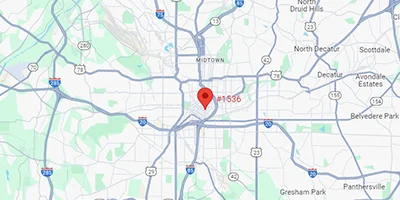 Get Directions
Spaulding Injury Law:
Alpharetta
Personal Injury & Car Accident Lawyer
44 Milton Ave #132
Alpharetta, GA 30009
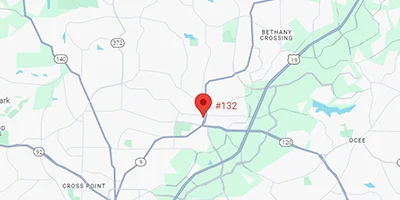 Get Directions
Spaulding Injury Law:
Cumming
Personal Injury & Car Accident Lawyer
5860 Bond St
Cumming, GA 30040
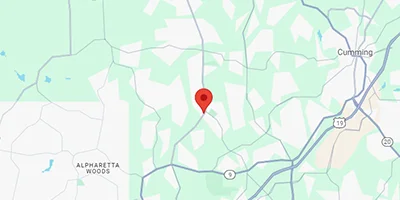 Get Directions
Spaulding Injury Law:
Lawrenceville
Personal Injury & Car Accident Lawyer
223 Scenic Hwy S #202
Lawrenceville, GA 30046
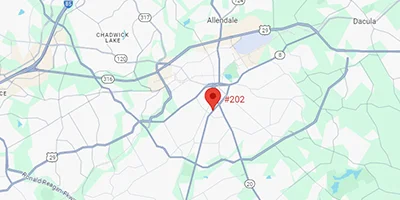 Get Directions