

If someone else’s negligence leaves you injured in a car accident, a slip and fall accident, or any other kind of accident, accepting a settlement offer from the insurance company involved before you’ve assessed your total damages and consulted with an experienced personal injury attorney is never a good idea.
If you’ve been injured as a result of someone else’s negligence, you face a difficult path toward recovery, and obtaining the compensation to which you are entitled is likely critical to your success in this endeavor. If someone else has caused you to be injured, you’re going to be dealing with the insurance company involved, but accepting a settlement offer before you’ve consulted with an experienced personal injury attorney on the matter is not in the best interest of your case – or your recovery.
The Insurance Company
While it’s true that the insurance company is responsible for covering your injuries and is paid for doing so, this does not mean that collecting the compensation to which you are entitled is going to be a smooth process. Insurance companies are in the business of making money and they are skilled and dedicated in doing so. Several practices that insurance companies commonly employ toward the goal of increasing profits include the following:
Insurance companies will sometimes make speedy settlement offers before the claimant has adequate time to fully assess and consider the extent of his or her physical, financial, and emotional damages. Accepting such an offer can leave you with far too little compensation to address all your recovery needs.
Insurance companies will sometimes drag the claims process out so long – and/or make it so overly complicated or laborious – that claimants become frustrated and far more likely to simply give up altogether on ever successfully recovering on their damages. A well-placed offer at this point (regardless of how low) is far more likely to be accepted.
The fact is that once you sign off on a settlement offer, whether it covers your full array of damages or not, you have no additional recourse to obtain any compensation that you might have been entitled to in the first place.
Discuss Your Claim with an Experienced Personal Injury Attorney Today
If an insurance company offers you a settlement offer regarding a serious injury that was caused by someone else’s negligence, the dedicated personal injury lawyers at Spaulding Injury Law can help. Our legal team is committed to helping ensure that the offer adequately covers your full range of physical, financial, and emotional damages before we encourage you to accept any settlement offer. We’re on your side, so please don’t hesitate to contact us online or call us at (770) 744-0890 today.

In nearly every personal injury case, injury attorneys must deal with the resolution of health care related liens incurred by the client before the client can receive full disbursement of the settlement or verdict. While there are many different types of liens that can be created depending on the case, the lien that is the most difficult to handle for Atlanta personal injury attorneys and clients alike is the ERISA health insurance lien.
This guide will walk through several steps we take in handling ERISA liens in personal injury cases. These liens have become much more difficult to resolve since last years US Supreme Court ruling in McCutchen. ERISA plans and third-party administrators hired by plans to collect on ERISA liens are using the McCutchen ruling to suggest to lawyers that ERISA plans now cannot lose and must always be reimbursed for every dollar of the ERISA lien.
However, the McCutchen ruling was nothing more than a half victory for ERISA plans and in certain jurisdictions such as the 11th Circuit in which our firm practices, it does not add much to the already difficult time plaintiffs face in negotiating ERISA liens.
New Era In ERISA Negotiations — McCutchen’s Half Victory
In any negotiation with an ERISA plan or administrator, it is important to first understand the implications of the McCutchen ruling. The Supreme Court in McCutchen ended the split in circuits on whether equitable defenses apply in ERISA subrogation claims by holding that they do not apply.
The reader’s digest version of the McCutchen ruling is that equitable defenses will not apply if the Plan language disavows them. Before McCutchen there as a circuit split on the use of equitable defenses. This was a victory for ERISA Plans in those jurisdictions that had held for some time that equitable defenses apply regardless of the Plan language.
McCutchen however was also a victory for plaintiffs in the sense that the Court went on to rule in that case that because the language was silent as to the treatment of attorney’s fees owed to the plaintiff lawyer out of the settlement, the default rule would be the equitable principle of the common-fund doctrine. Therefore, the Plan in that case had to reduce its lien cover some of the attorneys’ fees owed. A victory for plaintiffs in the use of equitable defenses as the default rule where there is gaps in Plan language.
So at the end of the day, McCutchen stands for the simple proposition that the Plan language will rule the determination of whether and to what extent an ERISA Plan must be reimbursed.
How Is The Plan Funded?
This is the most important question to answer in your effort to prepare to negotiate the lien. Is the Plan self-funded or insured? Why does this matter? Because the answer to the question will determine whether Federal law or State law applies to the interpretation of the Plan language and whether the Plan has a right of reimbursement.
If the plan is self-funded (the employer funds the Plan and thus the health care expense payments with its own money), Federal law preempts state law and you are stuck with McCutchen and other Federal cases on the questions of ERISA subrogation. If the plan is insured (an insurance company is paying the health care expense payments with its money), then Federal law does not preempt state law on the question of ERISA subrogation. In some states, the distinction between Federal law and state law on the regulation of insurance and thus subrogation is nothing more than a distinction without a difference. In others, it is a huge advantage to the plaintiff to be operating under state law.
Here is a quick example from my jurisdiction (Georgia) highlighting one ramification of self-funded v. insured ERISA plans. Georgia law on insurance carves out a unique statutory requirement on all health insurance related plans regarding subrogation rights. Before the consummation of a personal injury case, if a plaintiff requests by certified mail a detailed list of all medical benefits provided by a Plan for treatment related to the injuries sustained by the plaintiff, the Plan has 10 days to respond to the request by certified mail providing a detailed explanation of all benefits provided. If the Plan does not follow the statute to the letter, the Plan loses all rights to reimbursement.
Where To Look / What To Look For?
With the self-funded v. insured question looming large, the next question is where to look and what to look for to answer this all important question. There are several places. The first is the SPD (Summary Plan Description). You will need to request this from the third party administrator handling the claim and/or directly from the Plan Administrator.
However, I have found that looking up the Form 5500 online is the fastest way to get an idea of how the Plan is funded. The Form 5500 is a federal filing that must be filed annually by each employer maintaining an ERISA plan. The fastest way to find this form is to register with www.freeerisa.com and search by employer name. It is free.
Once you pull up the latest Form 5500 for the Plan, look at page 1, elements 9a (“plan funding arrangement”) and 9b (plan benefit arrangement”). Each of these elements lists the following options:
- Insurance;
- Section 412(e)(3);
- Trust;
- General assets of the sponsor.
If boxes (3) and/or (4) are marked on both then the inquiry stops here because trusts and general assets of the sponsor exclude all policies of insurance and therefore are clearly fully self-funded Plans. If one or more of the other two boxes are checked then the inquiry continues by turning to the schedules attached to Form 5500.
What you are looking for is Schedules A or C. These schedules further detail the relationship between the payor of benefits and the Plan. Confusion often lies in looking at the Form 5500 because large companies will have several benefits plans reported on the form and often times there will be multiple Schedule As and Cs attached to the Form 5500 (i.e. one for a dental plan; one for a vision plan; one for a life insurance plan etc.). This leads to multiple funding arrangements being selected that describes the multiple plans.
So first you want to find the schedules that identify the health plan. Look first for a Schedule A form for the health plan. If you do not have a Schedule A for the health plan skip to the Schedule C discussed below. If you have a Schedule A, here is what to look for on the schedule: First, you should have a named insurance company under Part 1(a). Next look at Part III(8). There are multiple boxes that can be checked. Box (8)(a) “Health” should be marked (again, tells you this is the health plan). If any other box in section (8) is marked other than (i) “Stop-Loss,” you are in luck and the plan is insured and state law applies. If the Stop Loss box is checked, see below regarding stop-loss issues.
If the benefit provider you are looking for is not on a Schedule A, it likely is on a Schedule C. On Schedule C, you will see reference to “claims processing,” “contract administrator,” and “plan administrator.” An insurer providing insurance would not be listed on a Schedule C and therefore is indicative of a fully self-funded Plan.
Stop Loss Insurance Situations
Many benefit plans these days use stop-loss insurance to pay claims. Stop loss insurance is an arrangement between the employer and an insurance company whereby the Plan is self-funded up to a certain predetermined maximum loss (either per employee or in the aggregate) and once that level is breached, the insurance company pays the rest of the benefit. Again, this will be revealed on the Schedule A.
One would think that stop-loss insurance situations would create an argument for state law application since a portion of the Plan is covered by an insurance policy—- in fact very often, the insurance portion of the Plan covers the vast majority of benefit payouts (employer contribution is more like a deductible payment). Instead, circuit courts that have heard the issue of how to treat stop loss Plans have ruled that such Plans are still self-funded plans preempting state law. This despite the fact that the employer is vastly limiting its liability by purchasing stop-loss policy coverage.
The stop-loss situation is the next area of ERISA law that the Supreme Court should take up and resolve once and for all.
Documents To Request
While the Form 5500 and related schedules will more often than not reveal whether the Plan is self-funded or insured, it remains important to request documents from the Plan to be sure you have the funding relationship correct. In addition and even more important now in light of the McCutchen ruling, ERISA negotiations come down to what the Plan language itself says or does not say so getting the Plan itself is absolutely necessary.
Every time we receive a response from a Plan administrator or third party administrator, we send a letter requesting at least the following Plan documentation:
- The Summary Plan Description;
- The Actual Plan or Contract;
- The Latest Summary Annual Report;
- The Latest Terminal Report;
- The Bargaining Agreement;
- The Trust Agreement;
- Any evidence your client was supplied with a copy of the Summary Plan Description.
If you are dealing with a third party administrator (Optum; Rawlings etc.) that is representing the Plan and/or the Plan Administrator, they should be able to get all of this documentation. Usually, we will start with a simple request to this entity for these documents. Often times, however, the third party admin is only able to get the Summary Plan Description. In those situations, we end up sending a statutory request pursuant to Section 1024(b)(4), Title 29, US Code. Under this code section, should the Plan Administrator fail to provide the documentation within 30 days, a fine of $100 a day until production can be obtained by the plan participant.
The Aftermath Of ERISA Liens After McCutchen
The McCutchen ruling confirms that the Plan language will rule all decisions regarding reimbursement of an ERISA lien when it is a self-funded Plan. Everything from the ability to use equitable defenses to who pays the plaintiff’s attorney’s fees are now controlled by the language in the Plan. Only if there is a gap in the Plan language on an equitable principal or lack of mention of how attorney’s fees will be handled is an argument created in favor of the plaintiff against the ERISA lien.
Here are some tips on what to look for in the Plan language to help with legal arguments for the plaintiff on a lack of reimbursement right or reduction for such things as attorney’s fees:
1. Can You Argue the Made-Whole Doctrine:
Look to see if there is specific Plan language that abrogates the made-whole doctrine. Most Plans now contain this language and certainly under the McCutchen ruling it is not crystal clear that such language will prevail over any circuits use of the made-whole doctrine as the default rule. If you are lucky and the Plan does not eliminate the use of the made-whole doctrine, this is likely your first and best defense against reimbursement of the ERISA lien.
2. Does Plan Contain Specific Language Authorizing A Valid Right of Recovery
McCutchen did not touch the prior ruling by the Court in Sereboff v. Mid Atlantic Medical Service, Inc. wherein it held that an ERISA carrier can only enforce its subrogation rights if the Plan specifically identified a particular fund out of which reimbursement much occur separately from the beneficiaries general assets. If it does not then the carrier has absolutely no right to recovery.
The simplest way to illustrate this distinction is looking at two contrasting Plans analyzed by the 11th Circuit in Popowski v. Parrott :
- Plan 1: Language stated that a lien was created “on any amount recovered . . . whether or not designated as payment for medical expenses” and “the Covered Person . . . must repay to the Plan the benefits paid on his or her behalf out of the recovery made from the third party or insurer.”
- This Plan language was enforced by the court because it created a lien on the amount recovered and only from that amount (i.e. specific fund).
- Plan 2: Language claimed a right of reimbursement “in full and in first priority, for any medical expenses paid by the Plan relating to the injury or illness.” No mention was made in the language regarding from what funds this payment was to be made and therefore claimed a right to reimbursement not only from any third party or insurer but from the plaintiff’s general assets.
This Plan language was not enforced by the court because it did not create a line on the amount recovered only.
3. Like in McCutchen, Look For Attorney Fee Payment Language
This is the common-fund doctrine equitable principal. McCutchen is your guide to this analysis. Is there language in the Plan disavowing the duty to pay for any portion of the plaintiff’s attorney’s fees owed in recovering the money from the third party? Again, if the Plan language is silent as to whether attorney’s fees are to be taken into account in reimbursing the Plan, then you can argue using McCutchen that the default rule is that attorney’s fees are to come out of the amount owed. See McCutchen for how that is calculated.
Suggested Outline of Negotiation Positions To Take
- State Law Preemption: If you have favorable state law subrogation law that would eliminate or potentially eliminate the entire claim, start with the argument based on your investigation that the Plan is not self-funded and therefore State law applies.
- Lack of Specific Fund Language: If you have favorable Plan language that mirrors the Plan found unenforceable in Popowski then argue that there is no right of reimbursement under ERISA law.
- Make Whole Doctrine: If the Plan language lacks the disavowing of this doctrine argue the make whole doctrine means no recovery for the Plan in your case.
- Common Fund Doctrine: If the Plan language lacks language addressing attorney’s fees argue at the very least that the amount should be reduced for recovery of attorney’s fees. See McCutchen.
- Reduce Amount of Settlement That Applies to Medical Expenses: The Plan is only allowed to recover for medical benefits it provided and therefore should only be allowed to seek reimbursement from that amount of the settlement or verdict that paid for those expenses. If your case had a large pain and suffering and/or lost wage component and the recovery was small in comparison to those damages, argue that most if not all of the settlement proceeds were for things other than medical expenses. This is the whole point of Sereboff. The Plan only has a lien on the portion of the proceeds for medical expenses.
- Argue will not pursue claim at all if plan is going to seek full reimbursement. This argument is effective in those situations where the claim is worth much more than the available coverage and the ERISA lien will take all or almost all of the settlement or verdict proceeds from your client. What is the point in pursuing the claim if everything is going to go to the Plan. This argument brings up a good example of why it is important to start contacting the ERISA plan early in the case. If you wait until after the claim is settled then this point is lost.
- Argue the Facts. I call this one the Wal-Mart negotiation. You may recall seeing the headlines a few years back where a Wal-Mart employee was injured in a motor vehicle accident and as a result was left with permanent brain damage. Wal-Mart pursue in court its ERISA rights to collect the entire amount of the settlement the plaintiff received from the at-fault party’s insurance company. It would have left the plaintiff with nothing. After multiple negative news reports on the case, Wal-Mart dismissed its lawsuit and allowed the worker to keep all of the proceeds of his recovery. If your client is facing a similar situation against a large employer, employ the Wal-Mart negotiation.
Without question, it is impossible to go through every aspect of an ERISA lien negotiation in one article. We have attempted to lay out here numerous strategies that can be implemented to fight against the inevitable argument from Plans and third-party administrators they hire to collect on the liens that the McCutchen case is a complete game changer in their favor and therefore your client must reimburse the Plan in full. This is simply not the case in most jurisdictions.
[simple-author-box]
Why Insurance-UM Coverage Is Important in Atlanta

We find that many individuals who call us for help with serious injuries sustained after an auto accident do not realize that there are potentially more sources of insurance coverage than just the at-fault driver’s automobile policy. This is a good thing because more often than not, we see car accident cases where the at-fault driver does not have anywhere close to enough coverage to fully compensate our clients.
We strongly believe this is the number one reason injury victims should hire an attorney after a motor vehicle accident, as your attorney will know how to look for available insurance coverage for your losses.
Let’s talk about UM coverage and how it can be so important to whether you can fully recover for all of your losses after a severe wreck.
What Is UM Insurance?
To answer this, we must start with what it is not. UM insurance is not something the at-fault driver carries.
Instead, it is coverage you purchase typically on your own auto policy. It stands for Uninsured Motorist or Underinsured Motorist coverage. It is there to protect you when you are injured in an accident caused by the negligence of another driver.
It provides you with coverage in two general scenarios:
- When the at-fault driver has NO insurance coverage at all—thus Uninsured Motorist coverage; or
- When the at-fault driver has insurance coverage but not enough to fully cover all of your damages.
Again, the purpose of UM coverage is to protect you from either recovering nothing when the at-fault driver has no insurance or to protect you from not fully recovering compensation when the at-fault driver does not have enough coverage. This is important because the minimum liability coverage in Georgia is only $25,000.00.
Not Everyone Has UM Coverage?
You may not have UM coverage. Why? Because unlike auto liability coverage, Georgia law does not require you to have it. You can decline the coverage completely or choose a lower limit of coverage than you have for liability coverage on your policy.
Look at your insurance policy declarations page to find out whether you have the coverage. It will be a separate line item of coverage with its own premium that is paid for the particular coverage. If you don’t have coverage, we highly suggest that you add it immediately.
How Does It Work—Two Types of UM Policies
Once you know what it is, whether you have UM coverage is easy to figure out. The difficult question is whether your coverage will apply to your car accident claim, and if so, to what extent.
The reason is that there are two UM coverage products to choose from in Georgia. Depending on which one you purchase and the amount of coverage provided by the at-fault driver, the answer to whether it applies and to what extent will be different in each case.
Let’s discuss the two different types of UM coverage to learn more about how your UM coverage may or may not apply.
First Type—Reduced Coverage UM
This type has two names: Reduced Coverage or Difference-in-Coverage UM. As the name suggests, this type of UM coverage applies to the extent that its limits are above the limits of coverage the at-fault driver has on their automobile. But only for the difference between the two numbers.
Here is how it works: At-fault driver has $100,000.00 in coverage, and you have $300,000.00 of UM coverage that is Reduced Coverage or Difference-in-Coverage UM. Because of your injuries, your case is worth $400,000.00. As a result, the at-fault driver’s insurance will pay you the limit of $100,000.00. Then, your UM will pay you only the difference between its $300,000.00 limit and the at-fault driver’s $100,000.00 limit, or $200,000.00. Your total recovery is $300,000.00 in this scenario.
Second Type—Add On UM
This is a newer UM product in Georgia and the name reveals what it does. Unlike Reduced Coverage UM, Add On UM provides additional coverage to you up to the limits of coverage you purchase, added on to the coverage provided by the at-fault driver.
This is the UM product you want. For example, under the above scenario, if you only recovered $300,000.00 total for a claim worth $400,000.00, with Add On UM, you recover the full $400,000.00.
Here is how it works. You first recover the $100,000.00 from the at-fault driver’s insurance company just like in the other scenario. What is different is your UM coverage applies in addition to this money. In other words, it is added on top of the $100,000.00. Therefore, you receive $300,000.00 from your UM carrier, not $200,000.00 in this scenario.
Keep in mind that you must specifically request the particular type of UM coverage that you want from your agent.
Conclusion
Insurance coverage available to accident victims can be a difficult topic to grasp fully, even for lawyers. This is especially true for UM coverage. There are many potential scenarios where UM coverage may apply in addition to UM coverage on your own automobile or the automobile you were in at the time of the accident. This is why it is always advisable to discuss your claim with an experienced car accident attorney first.
Best Practices For Handling A Property Damage Claim
When it comes to car accidents, the vast majority of the attention given by first responders, insurance companies, law firms, and others involved is to any personal injuries arising out of the accident. Fortunately, not all accidents involve personal injuries, but virtually all accidents involve some degree of property damage to the vehicles.
If your vehicle is damaged in a car accident caused by the negligence of another driver, you are entitled to receive compensation from the negligent driver’s insurance company for the damage to your vehicle. At Spaulding Injury Law, our Atlanta car accident lawyers represent injured clients in resolving any vehicle property damage claims as part of our total representation at no additional charge. Below is an overview of how a property damage claim usually works.
At The Scene Of The Accident
The property damage claims process really begins at the scene of the accident. The initial decision for the driver involved is whether or not the vehicle can still be driven safely and legally or whether it should be towed to a body shop or tow yard. If the vehicle has only cosmetic body damage but all lights and systems still work properly then it is usually safe to drive the vehicle home from the scene of the accident. If, however, any lights are not functioning or there is any doubt that the vehicle’s equipment and systems are in proper working order then the vehicle should not be driven from the scene, and a tow truck should be contacted.
Many tow companies have rate agreements with car insurance companies, and you can ask the tow company when you contact them if they have such an agreement with the at-fault driver’s insurance company. If they do, that will make your claim for payment of the tow truck bill and storage fees simpler.
Make sure to take photographs of the damage to your vehicle as soon as you can safely. Photos before the vehicles are moved are best but not a necessity. Take more photos than you think you will need to make sure you document everything.
Is Your Vehicle Totaled?
Once the vehicle is removed from the scene then the issue becomes repairs. Typically, the negligent driver’s insurance company will assign a separate claims adjuster to the property damage claim from the adjuster who is assigned to any personal injury claim you may have from the accident. The property damage claims adjuster will usually send a field representative out to physically look at the damaged vehicle and assess the total value of the damage.
If the total cost to repair the damage exceeds the value of the vehicle, the insurance will consider the vehicle a total loss or “totaled” and will purchase the vehicle from you for fair market value rather than pay for repairs. If the vehicle can be repaired, then the insurance company will be responsible for the cost of the repairs as well as the depreciation in fair market value that the accident has cost the vehicle.
Insurance companies also negotiate rates with auto repair and body shops, and will often try to steer you to their preferred shops. You are not required to use the shops the insurance companies prefer if you have a mechanic or body shop you prefer to use. In fact, it can often be a good idea to have a mechanic or auto body repairman you trust evaluate the damage and provide you a repair quote. Because body shops work on cars that have been in accidents so frequently, the good ones usually know how to explain the repairs needed to an insurance adjuster on your behalf to make sure insurance will cover the full amount before the shop commits to doing the work.
How to Value Your Vehicle
Always make sure insurance approves the repair quote and agrees to pay it before authorizing the work. Under Georgia law, if repairs are done on your vehicle which are not paid for, the repair shop has a lien on your vehicle which they can enforce by keeping your vehicle and not returning it to you until full payment for the work is received. So if you authorize repair or body work before receiving approval from the insurance company, you could be forced to pay out of pocket for any amount of repairs that insurance later objects to as being unreasonable or unrelated to the accident before you can get your car back from the shop.
If your vehicle is a total loss, insurance must pay you the fair market value including your tag and title fee plus any additional considerations which add value to your vehicle. Usually fair market value can be determined using valuations provided by organizations such as Kelley Blue Book, Edmunds, NADA, and similar tools available to insurance companies. Each of these organizations provide tools on their website which enable you to obtain an approximate value for your vehicle in the condition it was in prior to the accident.
By obtaining fair market value reports from multiple sites, you should have pretty good evidence of the value of your vehicle. This can be used to negotiate with the insurance company if their valuation differs greatly from yours.
Usually, however, because of the widespread availability of these vehicle valuation tools online, the fair market value of your vehicle is not a hotly disputed issue with insurance companies. While their valuation will be based on multiple factors including the field adjuster’s report and their own valuation tools, their determinations of fair market value are typically close to those provided by Kelley Blue Book and others if the vehicle data being entered is accurate.
Overall, while it can still be a headache to have to deal with, the property damage claims process is much faster and much more straightforward than the personal injury claims process because repairs needed and vehicle values are much quicker and easier to objectively determine than medical diagnoses and pain and suffering. Thus, there is usually much less to fight about in property claims and much less money at stake than there often is in personal injury claims.
Nevertheless, if your vehicle is damaged in a car accident and you are unsure of your rights or how to proceed or if the insurance company is not treating you fairly, contacting an experienced car accident attorney who can help you through the process is always a good idea.
Machine Guarding Accidents and Workplace Injuries

Accidental amputations are never minor accidents. Losing a digit or part of a limb is almost always life changing, and the healing and recuperation can require many painful months. Even in cases where the amputee is able to return to work, there is no guarantee that he or she will be as productive in future endeavors as they were before the workplace accident.
No amount of money can replace the finger, limb, or flesh that you lose in a workplace accident. However, even though amputation accidents are universally acknowledged as severe, painful, and financially costly, a vast number are caused by preventable lapses in equipment maintenance. In Georgia, a statistically significant number of amputations and severe injuries are caused by faulty or missing machine guarding on work equipment.
In Atlanta, personal injury attorneys typically begin a workplace injury case by examining the equipment for appropriate guarding. Typically, the proper guarding was originally installed on the machine by the employer, but because it was causing slower run times, or the guard itself became faulty (hinge issues, wear and tear), it was removed and not replaced.
In the State of Georgia, there are many legal standards covering the area of proper machine guarding. OSHA regulations and industry guidelines contain very specific and detailed requirements with regard to machine guarding. Moreover, the manufacturers of the machines will often provide for specific guarding procedures to meet federal regulations and to bolster safety. When Georgia personal injury attorneys are constructing an amputation or severe injury case, they will examine the machines, the guards, whether the machine’s use was consistent with its intended purpose, the work area surrounding the machine, and even the design of the equipment, to determine liability. Naturally, actions by the employer, like removing machine guarding, or instructing employees to do so, establish a clear line of responsibility to the employer.
If you are a machine worker in the State of Georgia, you should advise your employer of the issues of an improperly guarded machine in your workplace. Preventing an amputation is far better than filing suit for one after the fact. However, if it’s too late and you’ve already lost part of a finger, arm, or skin in a machine accident, you should employ the services of an experienced Atlanta or Georgia personal injury lawyer to examine your case.
What Colleges Are Located in Lawrenceville, Georgia?
Lawrenceville, Georgia offers a variety of educational options. While the colleges are not as large as some in other parts of the state, they are high quality and provide the students with wonderful opportunities to help them begin their careers and life choices. The educational levels taught are as advanced as anywhere in the world.
Lawrenceville is located just a few miles from Atlanta, Georgia and several other cities that have wonderful educational opportunities. For a list of colleges and universities that are near Lawrenceville, do more research in the area. You will find that there are 56 colleges and universities within a 50-mile radius of Lawrenceville. There is no degree you cannot get.
Below we will feature the colleges that are in Lawrenceville, GA. There are also technical schools and trade schools, as well as online degree programs available for the citizens of all ages. So, let us look at the world of higher education for this historic town.
Georgia Gwinnett College
This college opened in 2005. It is a four-year, public college with an acceptance rate of 84%. The class sizes are small. None of the classes have more than 50 students, and over 28% of them have fewer than 20 students. The most popular majors chosen at this facility are Business, Communication, General, and Biology. Georgia Gwinnett College has financial aid available to their students and most students accept that help. Make sure to check the college enrollment list of schools that you are interested in before submitting your application.
University of Georgia, Gwinnett
This university offers 19 graduate degree programs, as well as certification programs and other educational advancements. It is conveniently located and offers some evening and weekend classes.
The campus offers graduate-level programs for working professionals, and many students from Atlanta take advantage of these opportunities. UGA goes above and beyond to assist students in reaching their educational goals. Financial aid is available.
Gwinnett Technical College
Gwinnett Technical College is a high-quality educational facility for those seeking a trade and associated degree rather than a 4-year degree. They have an easy open enrollment policy and teach many high demand fields.
Fields of study include:
- HVAC
- Automotive Service Technology
- Nursing
- Surgery Tech
- Early childhood development
There are several other real word careers to pursue with a degree from Gwinnett Technical College.
The majority (almost 100%) of the students who choose Lawrenceville Georgia own their own vehicle. Public transportation is almost non-existent. This is true for most people in the South. However, the campus is designed to get you around quickly.
College students who live on and off campus enjoy the security of a low crime rate and good people who look out for each other. There are plenty of excellent restaurants and clubs around for students and their guests. Lawrenceville is the kind of place you want to have some fun while pursuing their education and career path. No matter where you want to do in the future, this is the place to begin your journey.
People today have come to realize that everything we put into our body has an effect. This is one of the reasons why people are often choosing chiropractic medicine over traditional medication therapy to treat their neck and back pain. Patients do not want to rely on expensive prescription drugs to manage their pain. Instead, they are visiting chiropractors and benefiting from an alternative form of medicine that has been used for hundreds of years.
A chiropractor skillfully manipulates the muscles in your back and neck to gently adjust the spine. When the body is properly aligned, and all things are functioning to the best of their ability, then pain is eliminated.
Lawrenceville is 30 miles away from Atlanta. Many residents who are living in the community commute to the city for work. This makes seeking chiropractic care in the area easy. There are many notable professionals in Lawrenceville and more than 50 chiropractic healthcare providers in or around Lawrenceville. Let’s look at those who come out ahead of the rest.
Georgia Chiropractic Care
Dr. Wayne Stevens has been taking care of patients in Lawrenceville for more than 15 years. He and his staff of highly trained professionals are there to help you when you have been in an accident or experiencing pain. But more than that, they are committed to restoring you to complete health. Georgia Chiropractic Care rates very highly with clients and long-term patients who trust this staff with their health.
Bolen Chiropractic
On virtually every research tool online, Bolen Chiropractic shows up with a high rating from people. He has been serving the Lawrenceville community for more than 10-years. His staff, clean and comfortable office, and follow-up care is first rate.
Just Health Chiropractic Studios
This is the place to go if you have chronic pain or health issues that are difficult at best. Just Health Chiropractic believes everyone has a right to live a pain-free life, and they are dedicated to finding the issues that lower the quality of life of their patients. Their whole-body approach includes nutrition, weight-loss, and stress relief.
TN Chiropractic Clinic
The board-certified chiropractor at this facility is popular with the public. He is a caring doctor that helps the patient decide on a long-term health plan to help them for the rest of their lives. TN Chiropractic carries an impressive 5-star rating.
Below is a list of other highly qualified chiropractors in Lawrenceville. Please note: while some of these doctors accept Medicare as part of their payment, it is important that you verify if they are in your insurance company’s network before you book these. All the doctors and facilities on this list have a rating by patients of over 4 stars!
- AC Spine & Wellness Center
- The Joint Chiropractic
- The Chiropractic Wellness Connection
- Whole Life Health Center
- Sun Wellness – Holistic Healthcare
Whether you are looking for treatment for an immediate issue or trying to find the right doctor to form a long-term relationship with, you will find the right doctor in Lawrenceville. Pain does not have to affect every part of your life. It starts with putting things right where they belong and treating your body properly. The end results are a beautiful and healthy body that is free of pain.
Will Airbags Deploy when my Car is Off?

No, your car’s airbags will not deploy when the car is off.
Manufacturers equip the vehicles we drive with airbags to help keep us safe in the event of a collision. Airbags are deployed when the sensors detect a specific amount of impact in a specific area of the car, and the implementation of this safety mechanism has saved many lives since it became standard in all cars.
There are instances, however, in which airbags are not activated for a range of reasons, and one of these is when your vehicle has been off for a bit, such as in a parking lot.
Airbags Save Lives
The Insurance Institute for Highway Safety (IIHS) forwards a range of statistics – from a variety of sources – regarding just how effective airbags are at helping to save lives in car accidents, including:
- Front airbags have saved an estimated 50,457 lives since 2017.
- In front crashes, airbags decrease driver fatalities by 29 percent and decrease front-seat passenger fatalities for those who are at least 13 years old by 32 percent.
- Side airbags have saved an estimated 2,252 people’s lives since 2012.
Airbags Can Also Cause Injuries
The immense burst of energy required to quickly inflate an airbag can lead to serious injuries for anyone who is sitting too close to the pre-deployment airbag or who is thrown too close in the course prior to deployment. This concern was more significant, however, with earlier models, and they were most closely associated with the following:
- Low-speed crashes
- Lack of seat belt usage
- Improperly used child safety restraints
- Sitting too close to the steering wheel
Today, IIHS reports that serious injuries from properly functioning airbags are rare. However, they do happen. Airbags can be defective and deploy when unnecessary, catching occupants unaware and causing serious injuries. Even safety features can cause injuries when they do not work properly.
When Your Car Is Off
Once your car is turned off, it won’t deploy your airbags because the power necessary to trip the bags is no longer available. This said, however, there can be some power left in your vehicle’s circuit for up to an hour after turning it off, and this residual power may be adequate to deploy the airbags during this time frame.
After about an hour, however, your airbags will not deploy when your car is off, which can leave you vulnerable to parked car accidents. It’s important to note that your car doesn’t have to be running for it to be on – even having your key turned to accessory mode will do the trick for tripping the airbags. You can be sitting in your car in a parking lot and have the airbags suddenly deploy if your key is in the ignition.
When no Passenger Is Detected
Airbags don’t deploy when passengers, including the driver, are not detected in the vehicle. This means that if your car is parked and turned off – even if it is within the window in which an airbag could be deployed – your vehicle will detect an absence of passengers and, as a result, will not deploy. If you are in your car during the few minutes when power remains available, factors such as the following can interfere with the deployment of airbags:
- There is a light passenger, such as a child, in one of the seats who doesn’t trip the sensor
- You aren’t wearing a seat belt (for some vehicle makes)
Airbags are designed to protect the occupants of vehicles, and when there are no passengers, there’s no one to protect.
Parked Car Accidents
Once you make it to your destination and park, we tend to sound the internal all clear, but the truth is that you can be injured in a parked car accident. When you’re parked on the side of the road, the traffic all around you can reach significant speeds, and if your vehicle is struck, the impact can be considerable.
A Parking lot, on the other hand, tends to be a driving free-for-all in which far too few motorists take the rules seriously. When you’re in your car in a parking lot, another driver can back into or drive forward into your vehicle with significant force that can lead to significant injuries.
An Experienced Atlanta Car Accident Attorney Is on Your Side
The Food-O-Rama Food Truck Festival is all about fun and good times, but accidents can happen. If someone else’s negligence leaves you injured, the skilled Atlanta personal injury attorneys at Spaulding Injury Law are standing by to help. We are on your side, so please don’t delay reaching out and contacting or calling us at 770-758-1382 for more information today.
Truck Accident Claims in Georgia
As experienced truck accident lawyers, we are aware of the legal distinctions and differences in the way that truck crashes are handled versus typical car accident cases. However, it might surprise those who have never been involved in a personal injury case involving a truck crash that these types of collisions are distinctly different from common car accidents. For this reason, it is important to hire an experienced truck injury lawyer who knows the ins and outs of these cases.
Determining Liability in Personal Injury Cases Involving Commercial Truck Accidents
Generally, in a car accident injury case, the only defendant in the case is the driver. This is not the situation with truck accident claims in Atlanta. When a truck is at fault in a collision, there are quite often multiple potential defendants (i.e. the driver, the owner of the vehicle, the transport company, etcetera). The following is a breakdown of the potential defendants and the corresponding theories of liability associated with each one beyond just the truck driver him or herself.
When Are Employers Liable For A Tractor Trailer Crash in Atlanta?
This could exist in a situation where the driver is a company employee. Particularly if the company required the driver to do something that led to the accident. Most often our truck accident attorneys see the employer/trucking company liable in situations where the company itself had a long history of trucking regulation violations; failed to properly maintain the tractor and/or trailer involved in the wreck; or was negligent in the hiring and retention of the truck driver because of his or her poor driving history.
For instance, if a trucking company hired a driver out of Atlanta but overlooked the fact that he served time in DeKalb County for vehicular manslaughter, and his license had been revoked, they would have a tough time beating a negligent hiring claim in a Georgia court.
When Can A Trucking Attorney Hold Leasing Companies Liable?
This occurs when a company leases a truck and the driver is a known operator/leasee. The leasing company could potentially be partially liable for the truck crash.
Why Are Brokers Often Held Liable For Trucking Accident Injuries?
A middleman works with the shipper and the driver to coordinate a shipment for hire. The broker could be shown to be liable by an effective truck accident lawyer.
How Can A Truck Wreck Attorney Hold Shippers Liable For Your Injuries?
If a load is packed improperly, and that improper packing results in an accident, the company that prepared the load would be liable to your truck accident lawyer. There are several other ways the shipping company itself could be partially at fault for the accident.
Why is it Difficult to Reach A Truck Accident Case Settlement in Atlanta?
The fact that there are so many potential defendants in each and every tractor-trailer accident case in Georgia makes these cases much more difficult than your traditional car accident case. Another good example of the complicated nature of these cases can be found in the number of ways the truck driver or herself can be found to be liable for the accident.
For example, driver fatigue is an often-cited reason for tractor-trailer accidents in Georgia. So much so that the State of Georgia and the Federal Government have set strict limits on how many hours a commercial truck driver can operate his or her vehicle in a given period. Truck drivers are actually required to log these hours. If the logbook shows that the driver has exceeded those hours, the plaintiff’s attorney may make a case based on this theory of liability alone.
If you or a loved one has been involved in a truck crash around Atlanta or anywhere else in Georgia, you should contact an experienced, reputable truck accident attorney—one who handles truck crash claims in Atlanta.
Other Sources of Insurance–UM Coverage Is Important
We find that many individuals who call us for help with serious injuries sustained after an auto accident do not realize that there are potentially more sources of insurance coverage than just the at-fault driver’s automobile policy. This is a good thing because more often than not, we see car accident cases where the at-fault driver does not have anywhere close to enough coverage to fully compensate our clients.
We strongly believe this is the number one reason injury victims should hire an attorney after a motor vehicle accident, as your attorney will know how to look for available insurance coverage for your losses.
Let’s talk about UM coverage and how it can be so important to whether you can fully recover for all of your losses after a severe wreck.
What Is UM Insurance?
To answer this, we must start with what it is not. UM insurance is not something the at-fault driver carries.
Instead, it is coverage you purchase typically on your own auto policy. It stands for Uninsured Motorist or Underinsured Motorist coverage. It is there to protect you when you are injured in an accident caused by the negligence of another driver.
It provides you with coverage in two general scenarios:
- When the at-fault driver has NO insurance coverage at all—thus Uninsured Motorist coverage; or
- When the at-fault driver has insurance coverage but not enough to fully cover all of your damages.
Again, the purpose of UM coverage is to protect you from either recovering nothing when the at-fault driver has no insurance or to protect you from not fully recovering compensation when the at-fault driver does not have enough coverage. This is important because the minimum liability coverage in Georgia is only $25,000.00.
Not Everyone Has UM Coverage?
You may not have UM coverage. Why? Because unlike auto liability coverage, Georgia law does not require you to have it. You can decline the coverage completely or choose a lower limit of coverage than you have for liability coverage on your policy.
Look at your insurance policy declarations page to find out whether you have the coverage. It will be a separate line item of coverage with its own premium that is paid for the particular coverage. If you don’t have coverage, we highly suggest that you add it immediately.
How Does It Work—Two Types of UM Policies
Once you know what it is, whether you have UM coverage is easy to figure out. The difficult question is whether your coverage will apply to your car accident claim, and if so, to what extent.
The reason is that there are two UM coverage products to choose from in Georgia. Depending on which one you purchase and the amount of coverage provided by the at-fault driver, the answer to whether it applies and to what extent will be different in each case.
Let’s discuss the two different types of UM coverage to learn more about how your UM coverage may or may not apply.
First Type—Reduced Coverage UM
This type has two names: Reduced Coverage or Difference-in-Coverage UM. As the name suggests, this type of UM coverage applies to the extent that its limits are above the limits of coverage the at-fault driver has on their automobile. But only for the difference between the two numbers.
Here is how it works: At-fault driver has $100,000.00 in coverage, and you have $300,000.00 of UM coverage that is Reduced Coverage or Difference-in-Coverage UM. Because of your injuries, your case is worth $400,000.00. As a result, the at-fault driver’s insurance will pay you the limit of $100,000.00. Then, your UM will pay you only the difference between its $300,000.00 limit and the at-fault driver’s $100,000.00 limit, or $200,000.00. Your total recovery is $300,000.00 in this scenario.
Second Type—Add On UM
This is a newer UM product in Georgia and the name reveals what it does. Unlike Reduced Coverage UM, Add On UM provides additional coverage to you up to the limits of coverage you purchase, added on to the coverage provided by the at-fault driver.
This is the UM product you want. For example, under the above scenario, if you only recovered $300,000.00 total for a claim worth $400,000.00, with Add On UM, you recover the full $400,000.00.
Here is how it works. You first recover the $100,000.00 from the at-fault driver’s insurance company just like in the other scenario. What is different is your UM coverage applies in addition to this money. In other words, it is added on top of the $100,000.00. Therefore, you receive $300,000.00 from your UM carrier, not $200,000.00 in this scenario.
Keep in mind that you must specifically request the particular type of UM coverage that you want from your agent.
Conclusion
Insurance coverage available to accident victims can be a difficult topic to grasp fully, even for lawyers. This is especially true for UM coverage. There are many potential scenarios where UM coverage may apply in addition to UM coverage on your own automobile or the automobile you were in at the time of the accident. This is why it is always advisable to discuss your claim with an experienced car accident attorney first.
Connect with us


- November 2025
- October 2025
- September 2025
- August 2025
- July 2025
- May 2025
- April 2025
- March 2025
- February 2025
- January 2025
- December 2024
- November 2024
- October 2024
- September 2024
- July 2024
- June 2024
- May 2024
- April 2024
- March 2024
- February 2024
- January 2024
- December 2023
- November 2023
- August 2023
- June 2023
- May 2023
- April 2023
- March 2023
- February 2023
- August 2022
Archives
- Alpharetta
- Atlanta
- Atlanta Legal Service
- Back Injuries
- Brain Injuries
- Car Accidents
- Construction Accident
- Covid-19
- Cumming
- Dog Bites
- FAQs
- Firm News
- Georgia
- Gwinnett County
- Interview
- Lawrenceville
- Motorcycle Accidents
- Negligent Security
- Pedestrian Accidents
- Personal Injury
- Premises Liability
- Property Damage
- Slip and Fall Accidents
- Spaulding Injury Law Service
- Swimming Pool Accidents
- Train Accidents
- Truck Accidents
- Uncategorized
- Video
- Wrongful Death
Categories
Spaulding Injury Law:
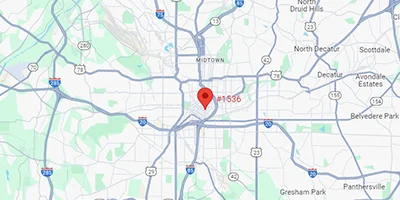
Atlanta
Personal Injury & Car Accident Lawyer
50 Hurt Plaza S.E. #1536,
Atlanta GA 30303
 Get Directions
Spaulding Injury Law:
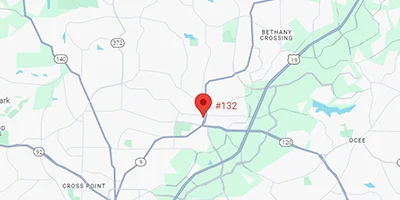
Alpharetta
Personal Injury & Car Accident Lawyer
44 Milton Ave #132
Alpharetta, GA 30009
 Get Directions
Spaulding Injury Law:
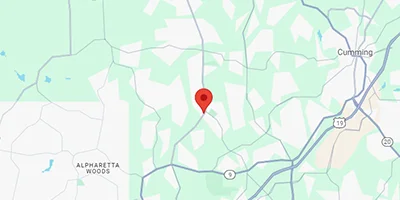
Cumming
Personal Injury & Car Accident Lawyer
5860 Bond St
Cumming, GA 30040
 Get Directions
Spaulding Injury Law:
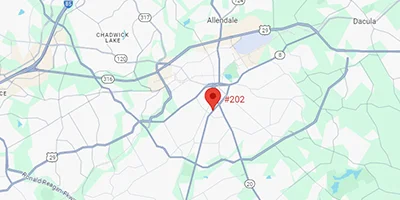
Lawrenceville
Personal Injury & Car Accident Lawyer
223 Scenic Hwy S #202
Lawrenceville, GA 30046
 Get Directions